The Engineering Blueprint for Sourcing Promotional Towels with Logo Bulk Order
Procurement managers often face the "quality-marketing gap"—where promotional towels look acceptable in samples but fail to absorb water or maintain logo integrity after the first wash. This results in brand damage and wasted marketing budgets.
Our promotional towels with logo bulk order system utilizes industrial-grade fiber engineering and high-definition branding technology. This guide provides the technical roadmap to secure high-performance inventory that reinforces your brand's prestige at a scalable cost.
1. Strategic Material Selection: Cotton vs. Microfiber for Promotion
A successful promotional towels with logo bulk order starts with the fiber. The material choice directly impacts absorbency, durability, print quality, and perceived value of your branded merchandise. Understanding the technical differences between fiber types ensures your marketing investment delivers lasting brand impressions.
Calculating the Absorbency-to-Cost Ratio
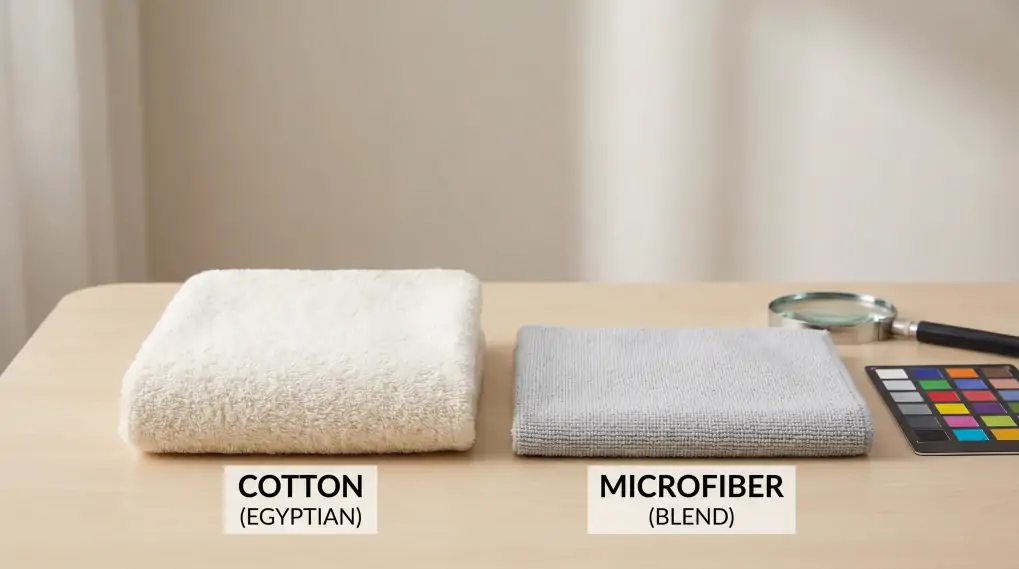
We offer 100% ring-spun cotton for luxury corporate gifts requiring superior absorbency and soft hand feel. Ring-spun cotton undergoes intensive spinning processes that align fibers in a tight, consistent pattern, resulting in towels that absorb moisture efficiently while maintaining structural integrity through hundreds of wash cycles. For promotional budgets prioritizing cost efficiency, 80/20 microfiber blends provide lightweight solutions ideal for sports events, fitness promotions, and outdoor marketing campaigns where quick-dry properties outweigh traditional cotton benefits.
Tensile Strength for Industrial-Level Durability
Tensile strength determines how much force promotional towels can withstand during industrial laundering cycles. Our cotton towels undergo tensile testing to ensure seam integrity under mechanical stress. Microfiber blends offer inherent wrinkle resistance but require careful handling during high-temperature processing. For warehouse operations managing high-volume inventory turnover, selecting materials with tensile strength ratings above 350N ensures longevity across multiple marketing campaigns.
Yarn Count Metrics (16s/1 vs. 21s/1) for Branding Precision
Yarn count directly affects both the visual appearance of your branding and the towel's functional performance. Higher yarn counts (21s/1) produce finer, smoother surfaces ideal for intricate embroidery and detailed logo reproduction. Lower yarn counts (16s/1) create thicker, more absorbent towels with a luxurious texture suitable for premium hotel partnerships and executive gifting programs. When placing bulk orders, specify yarn count in your tech-pack to ensure manufacturing consistency across all units.
 Download Technical Spec Sheet
2. Branding Engineering: Choosing the Right Logo Application
For bulk orders, we recommend Jacquard weaving if the design is part of the fabric's structural integrity. This technique integrates logos directly into the towel's pile, creating permanent branding that survives thousands of industrial wash cycles without fading, cracking, or peeling. The woven pattern becomes intrinsic to the textile, delivering brand visibility that endures throughout the product lifecycle.

Jacquard Weaving vs. Industrial Embroidery
For smaller batches or multi-colored logos requiring photographic detail, our high-speed embroidery machines provide 0.1mm precision with stitch densities up to 15,000 stitches per design. Embroidery delivers dimensional texture that creates tactile brand recognition, while Jacquard weaving provides seamless integration ideal for geometric patterns and corporate monograms. Our engineering team recommends the optimal branding method based on your design complexity, quantity requirements, and budget parameters.
Heat-Transfer Sublimation for Full-Color Saturation
Heat-transfer sublimation opens creative possibilities for photographic-quality logos, gradient designs, and complex brand imagery that cannot be achieved through traditional embroidery or weaving. Sublimation dyes penetrate polyester-based fabrics at the molecular level, producing color saturation that remains vibrant even after prolonged UV exposure and repeated laundering. This method excels for retail-ready promotional merchandise requiring shelf appeal and visual impact.
Avoiding "Print-Crack" in Mass Production
Print-crack failures occur when heat-transfer applications lack proper substrate preparation or curing protocols. Our production facilities implement strict quality control measures including pre-production wash testing, temperature calibration verification, and post-cure inspection using standardized color-matching equipment. Requesting lab-dip samples before mass production ensures your branding meets quality standards across the entire bulk order.
3. Deciphering GSM: Setting the Quality Threshold
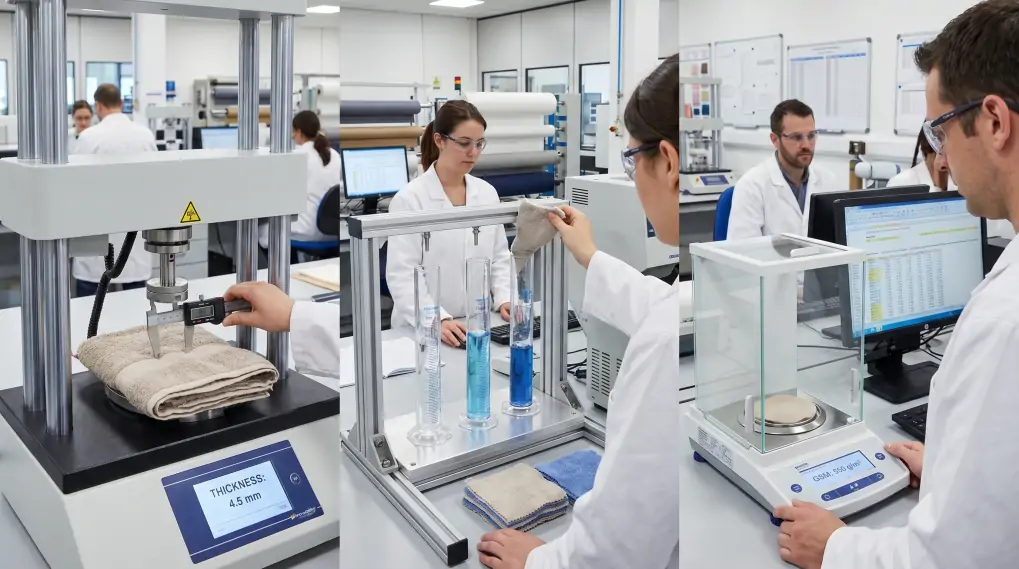
GSM (Grams per Square Meter) measures towel density and directly correlates to absorbency, thickness, and perceived quality. Understanding GSM specifications prevents costly procurement mistakes that result in promotional items failing to meet brand standards or user expectations.
Defining 350 GSM vs. 600 GSM Use-Cases
350 GSM towels provide lightweight performance suitable for fitness promotions, outdoor events, and budget-conscious marketing campaigns. These medium-weight towels dry quickly, pack efficiently, and reduce shipping costs for large-scale distribution. 600 GSM towels deliver luxury hotel quality with superior absorbency and plush hand feel. High-density towels create premium brand impressions ideal for executive gifts, hospitality partnerships, and retail merchandise where perceived value justifies higher per-unit costs.
Weight Consistency Across 10,000+ Unit Shipments
Maintaining consistent GSM across massive bulk orders requires precision manufacturing controls. Our production facilities utilize automated weaving systems with real-time weight monitoring, ensuring every towel in your order meets specified density requirements. Variance testing includes statistical process control (SPC) protocols that measure GSM across sample sets from each production batch, guaranteeing uniformity from the first unit to the final pallet.
The Physics of Drying Time and Pile Density
Pile density—the ratio of fiber to air space in the towel's surface—determines both absorbency speed and drying time. High-density pile towels absorb moisture rapidly but retain water longer, extending drying cycles in commercial laundry environments. Low-density pile provides faster evaporation rates suitable for fitness centers with rapid turnaround requirements. Our engineering team helps optimize pile density based on your specific use environment and operational constraints.
4. OEM Manufacturing: Scaling Your Brand Identity
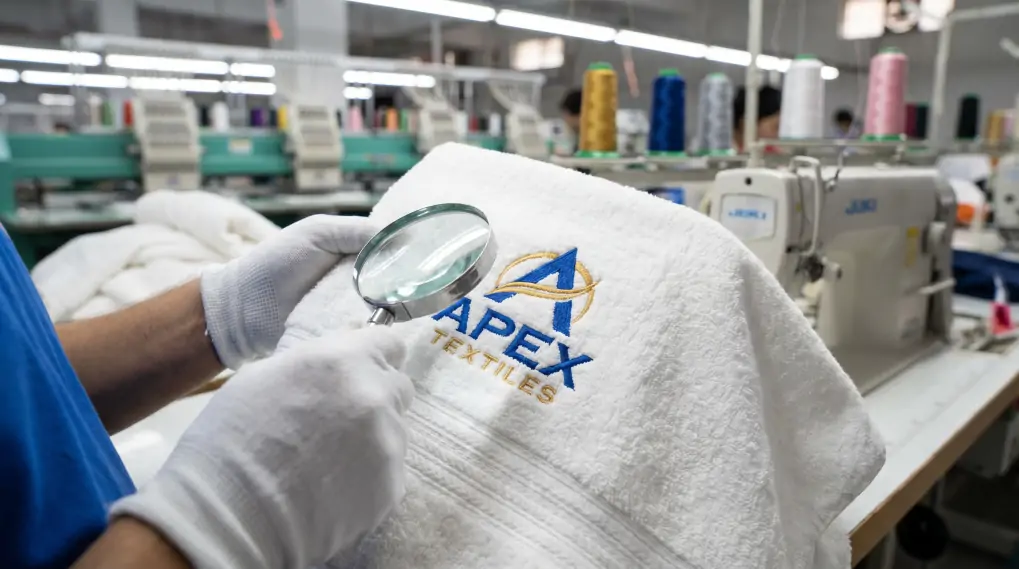
When placing a promotional towels with logo bulk order, your "Tech-Pack" serves as your quality insurance policy. This comprehensive document includes exact Pantone color codes, stitch density specifications, dimensional tolerances, and material certifications required for manufacturing consistency. Our OEM team reviews every tech-pack detail to identify potential production challenges before fabrication begins.
Tech-Pack Development for Global Consistency
Professional tech-pack development ensures your branded merchandise maintains visual identity across global distribution channels. Our textile engineers translate your brand guidelines into manufacturing specifications covering yarn composition, weave structure, finishing treatments, and packaging requirements. Digital tech-packs include color calibration data (Lab values, Delta E tolerances) and physical reference samples that guide production decisions throughout the order lifecycle.
Rapid Prototyping and Pre-Production Sample Approval
Our rapid prototyping service delivers pre-production samples within 7-10 business days, enabling comprehensive quality verification before committing to full-scale manufacturing. Sample approval protocols include dimensional inspection, color matching assessment, absorbency testing, and branding quality evaluation. This streamlined process prevents costly production errors and ensures your bulk order meets exacting brand standards.
Private Labeling and Custom Woven Tags
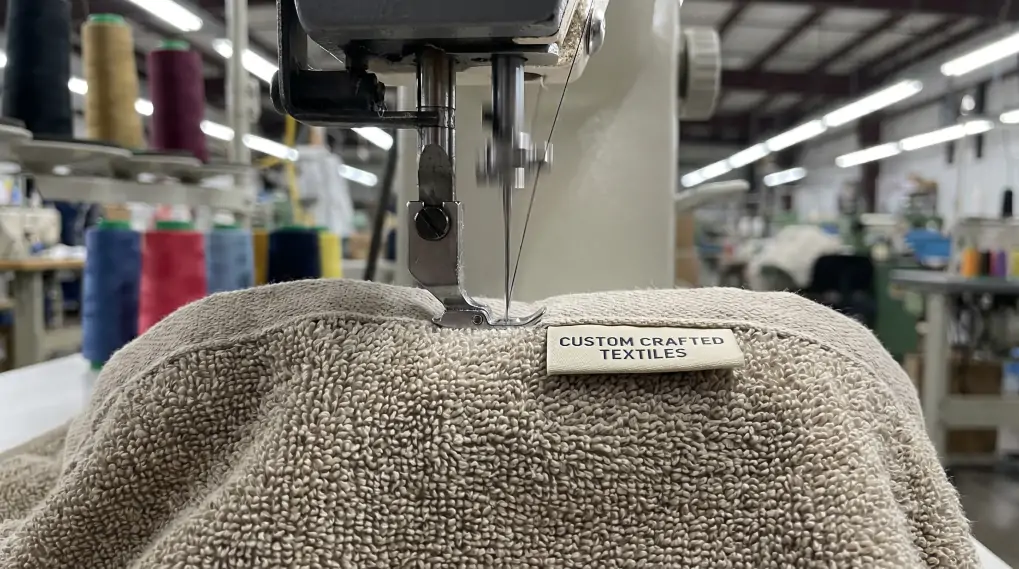
Complete brand immersion includes private labeling services covering woven labels, hang tags, care labels, and packaging inserts. Our in-house weaving facility produces custom woven tags with exceptional detail resolution, supporting complex logos, multi-language text, and sustainable material options. Private label programs transform promotional merchandise into branded collections that enhance brand perception across every touchpoint.
5. Compliance and International Safety Standards
Exporting promotional textiles across international borders requires navigating complex regulatory frameworks. Understanding certification requirements prevents shipment delays, customs complications, and legal liabilities that could derail your marketing campaigns. Our compliance team maintains current certifications for all major export markets.
OEKO-TEX Standard 100 for Skin Contact Safety
OEKO-TEX Standard 100 certification ensures every textile component meets human ecological safety requirements. This independent testing covers more than 100 harmful substances including carcinogenic dyes, heavy metals, formaldehyde, and allergenic colorants. For promotional merchandise distributed to consumers or used in healthcare, hospitality, and childcare environments, OEKO-TEX certification demonstrates commitment to user safety and corporate responsibility.
GRS (Global Recycled Standard) for Sustainable Sourcing
Environmental consciousness drives purchasing decisions across corporate supply chains. Global Recycled Standard (GRS) certification verifies recycled material content and responsible social and environmental practices throughout your supply chain. GRS-certified promotional towels appeal to environmentally-conscious brand audiences while meeting corporate sustainability commitments and ESG reporting requirements.
Navigating REACH Compliance for European Bulk Imports
The EU's REACH (Registration, Evaluation, Authorisation and Restriction of Chemicals) regulation imposes strict requirements on chemical substances in imported textiles. Our compliance documentation includes REACH compliance declarations, SVHC (Substances of Very High Concern) declarations, and comprehensive test reports from accredited laboratories. European market entry requires careful chemical management throughout the manufacturing process.
6. Industrial Quality Control (QC) Protocols
Our factory implements a 4-stage QC process for every bulk logo order, including needle detection, colorfastness testing, and absorbency verification. Rigorous quality control ensures every unit meeting your specifications reaches distribution channels, protecting brand reputation and eliminating costly customer returns or replacements.
AQL 1.5/4.0 Standards for Zero-Defect Batches
Acceptable Quality Level (AQL) standards define defect tolerance thresholds for bulk production runs. Standard textile QC protocols typically accept AQL 2.5 for minor defects, but promotional merchandise with visible branding requires stricter AQL 1.5 standards. Our QC inspectors conduct random sampling at each production stage, documenting findings against specification requirements and triggering process corrections when statistical thresholds approach limits.
Post-Production Tensile Strength Verification
Final production verification includes laboratory tensile strength testing using standardized procedures (ASTM D5034 for grab test method). Test results document breaking force, elongation percentage, and seam slippage measurements that verify structural integrity. Certificates of analysis accompany each shipment, providing documented proof of quality compliance for quality assurance departments and procurement committees.
Verification of Dimensional Stability and Shrinkage
Fabric shrinkage during commercial laundering threatens brand consistency and user satisfaction. Our QC protocols include standardized wash testing following ISO 6330 procedures, measuring dimensional change across length and width dimensions. Shrinkage rates exceeding specification limits trigger production process adjustments including fabric pre-shrinking treatments and construction modifications.
7. Logistics and Supply Chain Optimization for Warehouse Owners
Optimizing supply chain efficiency reduces total landed costs and improves inventory management capabilities. Understanding logistics variables helps procurement managers make informed decisions that balance cost optimization with lead time requirements and inventory carrying costs.
Optimizing Volumetric Weight in Container Loads
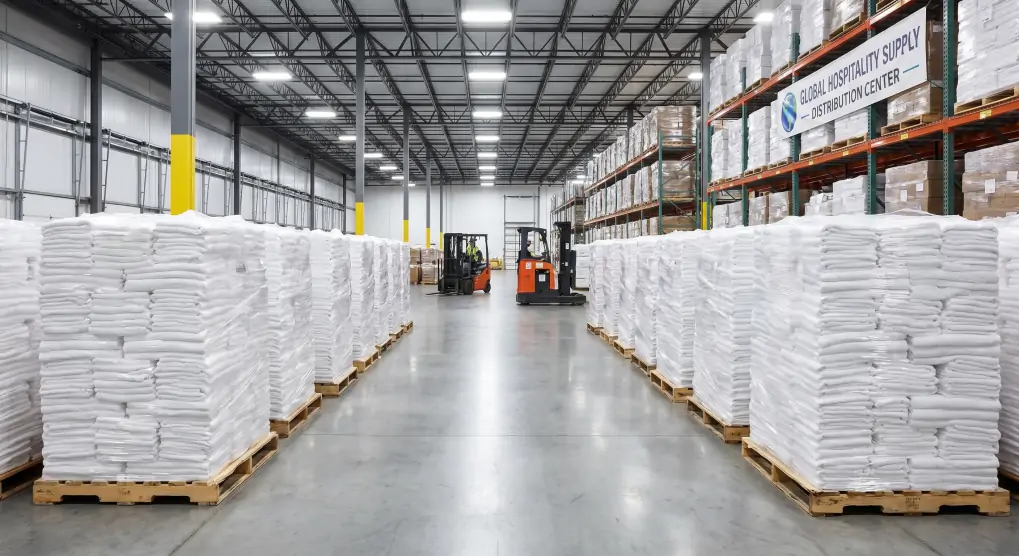
International shipping costs calculate based on either actual weight or volumetric weight, whichever is greater. Towel compressibility enables efficient container loading that maximizes quantity-per-shipment while minimizing freight costs. Our logistics team calculates optimal loading patterns using sophisticated software that accounts for package dimensions, pallet configurations, and container interior specifications to achieve optimal cost-per-unit transportation rates.
Managing Lead Times: From Prototype to Port
Standard production for an industrial batch (1,000–5,000 units) ranges from 25 to 35 days, including yarn-dyeing, weaving, branding application, and final quality control inspection. Expedited OEM programs are available for urgent event rollouts with compressed timelines. Understanding the critical path—from tech-pack approval through production scheduling, quality verification, and customs documentation—enables realistic campaign planning that avoids costly expediting fees or campaign delays.
DDP vs. FOB: Navigating Incoterms for Textile Bulk
Incoterms definitions determine responsibility allocation for shipping costs, insurance, customs clearance, and delivery timing. FOB (Free on Board) pricing transfers responsibility to the buyer once goods board the vessel, requiring separate coordination of freight forwarding, customs brokerage, and final delivery. DDP (Delivered Duty Paid) pricing includes all costs through final destination, simplifying procurement processes while potentially offering cost advantages through consolidated shipping arrangements.
8. The Economics of Bulk Pricing: Amortizing Sunk Costs
Understanding the financial dynamics of bulk textile procurement enables strategic pricing negotiations and total cost optimization. Machine setup costs, material efficiencies, and volume discounts combine to create compelling economics for large-scale promotional campaigns.
Understanding the Machine Setup-to-Volume Ratio
Each production run incurs fixed setup costs including machine calibration, color preparation, and initial waste material. As production volume increases, these setup costs amortize across more units, reducing per-unit manufacturing costs. Understanding this dynamic helps procurement managers evaluate whether premium pricing for smaller orders provides sufficient value against the flexibility and cost savings achieved through bulk purchasing commitments.
Tiered Pricing Strategies for 1,000+ Unit Batches
Tiered pricing structures reward volume commitments with progressive discounts that improve margins on marketing investments. Entry-level tiers (1,000-2,500 units) provide baseline bulk savings, while mid-volume tiers (2,500-5,000 units) unlock additional discounts that significantly impact total campaign costs. High-volume commitments (5,000+ units) access maximum tier pricing with priority production scheduling and enhanced quality assurance protocols.
Calculating Total Cost of Ownership (TCO) in Textiles
Unit pricing represents only a portion of total procurement costs. Comprehensive TCO analysis includes shipping and logistics, import duties and taxes, quality control expenses, potential defect replacement costs, and inventory carrying costs during extended distribution timelines. Our procurement consultants help clients develop comprehensive cost models that identify true landed costs and reveal optimization opportunities often overlooked in simple per-unit price comparisons.
9. Hemming and Border Design for High-Cycle Durability
Edge construction determines towel longevity in commercial laundry environments where mechanical action, chemical exposure, and thermal stress combine to challenge fabric integrity. Professional hemming techniques ensure promotional merchandise survives repeated washing while maintaining brand appearance.
Double-Needle Lockstitch vs. Overlock Finishing
Double-needle lockstitch construction creates two parallel seams using two needles and two looper threads, producing durable edges with professional appearance. This construction resists unraveling even under aggressive mechanical laundering conditions. Overlock finishing wraps edges with a continuous thread spiral, providing cost-effective edge treatment suitable for lower-volume applications where maximum durability is less critical.
Designing Dobby Borders that Resist Warping
Dobby borders—decorative woven patterns along towel edges—require careful engineering to maintain flat appearance through repeated wash cycles. Warping occurs when border construction lacks dimensional stability, causing edges to curl, twist, or bunch after laundering. Our textile engineers specify dobby construction parameters including thread tension, pattern density, and finishing treatments that ensure border flatness throughout product lifecycle.
Specialized Edge Reinforcement for Industrial Laundry
Commercial laundries subject towels to mechanical action far exceeding residential washing conditions. Industrial laundry specifications require edge reinforcement techniques including heavier thread weights, increased stitch density, and reinforced corner constructions that withstand tunnel washer environments. Specify industrial laundry compatibility in your tech-pack to ensure promotional merchandise survives the harsh treatment common in gym, hotel, and healthcare applications.
10. Industry Applications: Fitness, Hospitality, and Retail
Promotional towels serve diverse market applications, each requiring specialized engineering to meet unique operational requirements. Understanding application-specific needs enables procurement managers to specify products optimized for their specific use environment.

Engineering Gear for National Gym Chains
Fitness industry applications demand towels that survive high-temperature washing, maintain absorbency through heavy use cycles, and dry quickly between gym members. Our fitness-grade promotional towels feature reinforced construction with antimicrobial treatments, color-locked dyes that withstand bleach exposure, and compact folding designs for space-efficient storage in fitness center storage rooms.
High-Volume Event Merchandise for Marathons
Mass participation events like marathons, charity runs, and corporate challenges require bulk quantities delivered on tight timelines. Our event merchandise programs offer rapid production capabilities with flexible quantity options, race-specific customization including distance badges and year markers, and packaging solutions designed for efficient distribution at race venues.
Premium Corporate Gifting for Fortune 500 Companies
Executive gifting programs require premium quality presentation matching the prestige of Fortune 500 brand positioning. Our luxury gifting collections feature premium materials (Egyptian cotton, Supima cotton), sophisticated branding techniques (woven-in logos, leather tags), and elegant packaging solutions (gift boxes, satin ribbon, personalized cards) that create memorable brand impressions for high-value recipient audiences.
11. Custom Packaging and Presentation for Bulk Orders
Packaging transforms functional merchandise into memorable brand experiences. Custom packaging solutions enhance unboxing moments while providing practical benefits including product protection, inventory management, and retail display readiness.
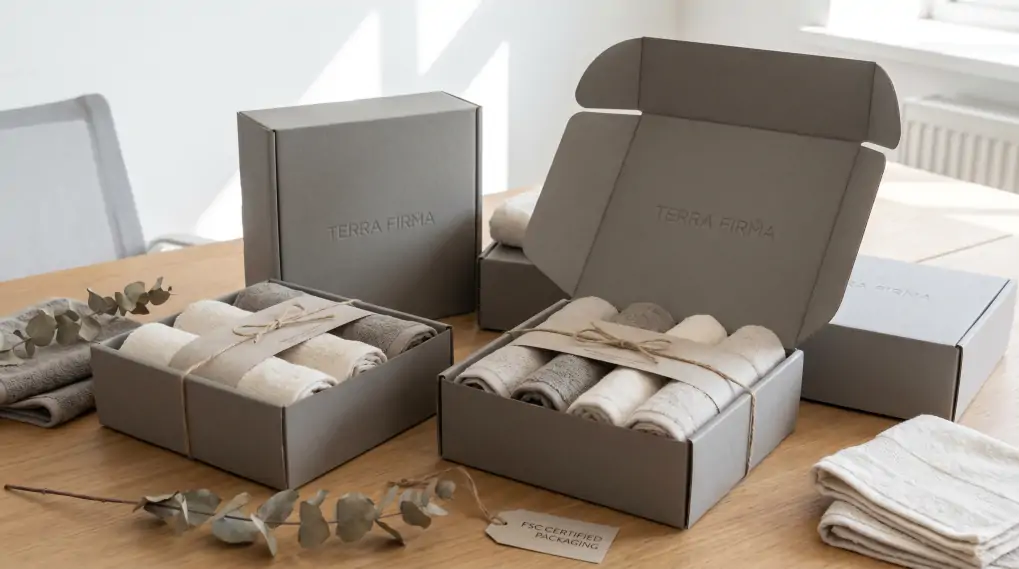
Sustainable FSC-Certified Paper Bands
FSC (Forest Stewardship Council) certified packaging materials demonstrate corporate environmental responsibility while meeting growing consumer expectations for sustainable products. Our paper band options include recyclable kraft paper, recycled content papers, and plant-based alternatives that decompose naturally. Sustainable packaging choices align with corporate sustainability commitments and provide marketing messaging opportunities for eco-conscious brand audiences.
Branded Mesh Bags and Silicone Carry Cases
Reusable carry solutions extend brand visibility beyond initial product use. Branded mesh bags serve gym users, beachgoers, and travelers who appreciate practical carrying convenience. Silicone carry cases provide premium packaging for executive gift programs, transforming into desk accessories or travel companions that maintain brand presence throughout busy professional schedules.
Retail-Ready Barcoding and Inventory Labeling
Bulk orders destined for retail distribution require UPC/EAN barcode labels, retail price tags, and care instruction labels that meet industry standards. Our retail-ready packaging service includes GS1-compliant barcode generation, hang tag attachment, and inner pack configuration that enables efficient retail shelf stocking. Inventory label specifications support warehouse management systems (WMS) integration for automated receiving and stock control.
12. Future Trends: Smart Textiles and RFID Integration
Emerging technologies transform promotional textiles from passive marketing tools into active brand engagement platforms. Understanding emerging trends positions procurement managers ahead of competitive differentiation opportunities.
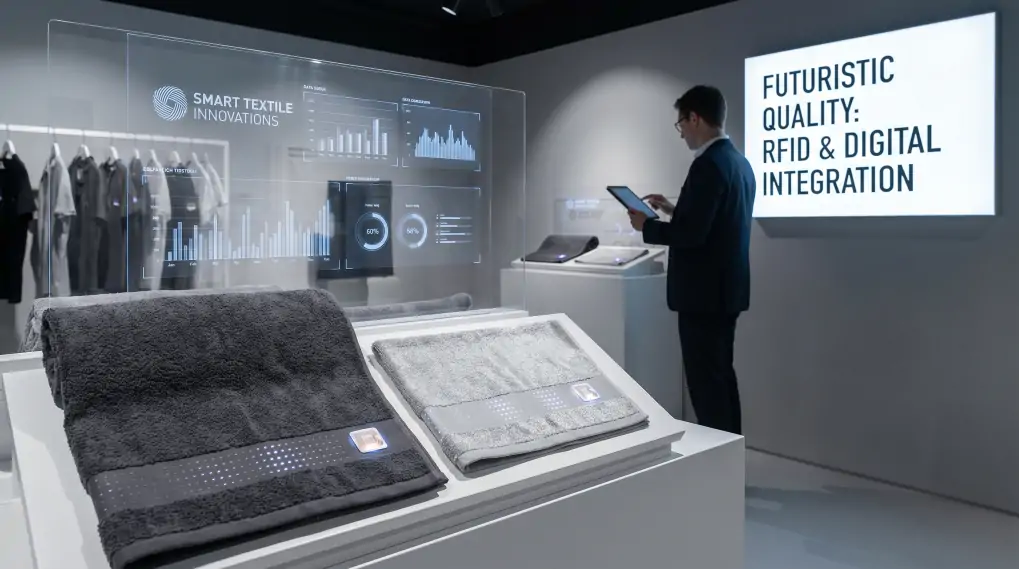
Tracking Inventory in Commercial Facilities with RFID
RFID (Radio Frequency Identification) technology enables real-time inventory tracking in commercial laundries, fitness centers, and hospitality operations. Embedded RFID tags facilitate automated inventory counts, prevent lost-item losses, and enable usage analytics that inform procurement optimization. RFID-enabled promotional towels create operational efficiencies that justify premium pricing while generating data-driven insights for continuous improvement.
The Shift Toward Bio-Based Fiber Innovations
Sustainability-driven innovation introduces bio-based fibers derived from plant sources including bamboo, eucalyptus, and agricultural waste streams. Bio-based textile alternatives reduce environmental impact while maintaining performance characteristics required for demanding applications. Early adoption positions brands as sustainability leaders while accessing premium positioning opportunities in environmentally-conscious market segments.
AI-Driven Design Customization for Fast-Response Batches
Artificial intelligence transforms design processes that traditionally required extensive lead times. AI-driven customization tools enable rapid design iteration, instant visual preview generation, and automated tech-pack creation that compress timelines from weeks to hours. Fast-response production capabilities empower marketing teams to capitalize on trending topics, timely events, and emerging opportunities with promotional merchandise that arrives before audience interest fades.
 Request Smart Textile Samples
Technical Specifications (EAV Model)
| Specification | Standard Option | Premium Option | Industrial Option |
|---|---|---|---|
| Material Composition | 100% Ring-Spun Cotton | Egyptian Cotton / Supima | 80/20 Polyester-Cotton Blend |
| GSM (Grams per Square Meter) | 350 GSM | 500-600 GSM | 250-300 GSM (Quick-Dry) |
| Yarn Count | 16s/1 | 21s/1 - 40s/1 | 20s/1 |
| Branding Method | Screen Print / Heat Transfer | Jacquard Weave / Embroidery | Dye-Sublimation |
| Minimum Order Quantity | 500 units | 1,000 units | 2,500 units |
| Lead Time (Standard) | 25-30 days | 30-40 days | 20-25 days |
| Certifications Available | OEKO-TEX Standard 100 | OEKO-TEX, GRS | OEKO-TEX, REACH, GOTS |
| Edge Construction | Overlock Finish | Double-Needle Lockstitch | Reinforced Industrial |
| Wash Cycles (Expected) | 100+ cycles | 300+ cycles | 500+ cycles |
| Shrinkage Rate | 5-8% | 3-5% | 2-3% (Pre-Shrunk) |
B2B Sourcing FAQ
Scale Your Marketing Impact with Industrial-Grade Textiles
Stop settling for fragile promotional items that dilute your brand. Partner with a factory that understands the technical rigors of promotional towels with logo bulk order manufacturing. Our team of textile engineers is ready to provide a full technical audit of your inventory needs.
Contact us today to discuss your next promotional campaign and discover how industrial-grade quality elevates your brand visibility.
Download Technical Sourcing Guide Request a Bulk Pricing Sheet Inquire About Our OEM Sample Kit