Procurement managers and warehouse owners often face the "quality-fade" trap—where initial samples meet standards, but bulk shipments fail in durability and absorption. This comprehensive guide provides a technical roadmap for navigating the private label towel manufacturer landscape in China. We address the primary pain points of MOQ flexibility, yarn-count integrity, and industrial lead-time management, ensuring your brand identity is supported by textile engineering that withstands high-frequency industrial use.
The Strategic Blueprint for Partnering with a Private Label Towel Manufacturer in China
500+
Minimum Order Quantity
300-900
GSM Range Available
15+
Years Manufacturing Experience
1. The Strategic Advantage of Private Labeling in the China Textile Hub
China's textile manufacturing infrastructure represents the most vertically integrated supply chain in the global hospitality textile industry. Partnering with a private label towel manufacturer China provides access to decades of institutional knowledge in fiber engineering, weaving technology, and finishing processes that have been refined through millions of production cycles.
Reducing Overhead with Direct Factory OEM Programs
Direct collaboration with a private label towel manufacturer China eliminates intermediary markups, allowing for competitive bulk custom towels for business pricing structures. By moving from transactional purchasing to strategic OEM partnerships, businesses can control the entire lifecycle of the product—from raw material selection to final packaging design. This vertical integration typically results in 25-40% cost savings compared to sourcing through trading companies or third-party distributors.
Proprietary Design and IP Protection in Mass Production
Industrial manufacturing in China operates under strict confidentiality protocols. When you engage with a best private label towel factory China, your proprietary designs receive the same protection as any domestic manufacturing operation. Our facilities implement comprehensive non-disclosure agreements, design compartmentalization, and secure digital asset management systems that safeguard your brand identity throughout the production process.
Scaling from Small-Batch Prototypes to 100K Unit Runs
The transition from prototype to mass production represents a critical inflection point in private label programs. Our manufacturing capabilities support seamless scaling from 500-unit pilot batches to 100,000+ unit annual orders. This flexibility allows brand managers to test market reception with minimal inventory risk before committing to large-scale production runs.
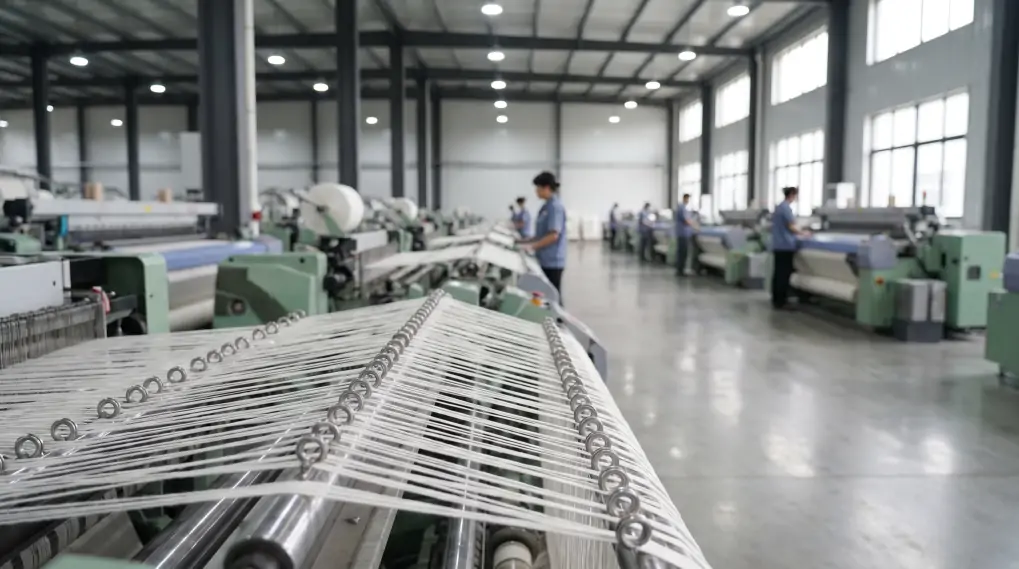
State-of-the-art weaving facilities enable precision control over fabric density and GSM specifications
Request Bulk Pricing Now2. Technical GSM and Fabric Density: Engineering the Perfect Towel
The Grams per Square Meter (GSM) metric serves as the primary technical specification for determining towel performance characteristics. This measurement directly correlates to absorbency capacity, drying speed, and operational weight—critical factors for bulk custom towels for business applications in hospitality and industrial settings.
Decoding GSM (Grams per Square Meter) for Performance
A professional private label towel manufacturer focuses on the mechanical properties of the pile. For hospitality applications requiring luxury feel, a 600-800 GSM specification provides the plush texture and superior water absorption that high-end hotels demand. Conversely, gym and industrial towels thrive at 350-450 GSM for rapid drying cycles that reduce laundry turnaround time and energy consumption.
Density vs. Weight: The Role of Terry Loop Height
The relationship between GSM and actual towel thickness depends on terry loop construction. High-quality loop piles maintain consistent height throughout the production run, ensuring uniform texture across all units in a bulk order. Our quality protocols include real-time monitoring of loop height distribution to prevent density variations that compromise hand feel.
Calculating Absorbency Rates Based on Fiber Density
Absorbency performance follows a predictable curve relative to GSM specifications. Laboratory testing demonstrates that every 100 GSM increase correlates to approximately 15% improvement in initial water uptake. For commercial laundry operations processing thousands of towels daily, this translates to measurable savings in cycle time and energy costs.
3. Yarn Selection: Combed Cotton vs. Open-End Engineering
Yarn construction methodology fundamentally determines the final towel's tactile properties, tensile strength, and longevity under industrial washing conditions. Understanding the technical differences between ring-spun, combed, and open-end yarns enables procurement officers to specify products that meet their operational requirements precisely.
The Durability of Ring-Spun Cotton in Bulk Sourcing
Ring-spun cotton represents the gold standard for premium private label programs. The spinning process aligns fibers in a parallel orientation, creating yarns with exceptional smoothness and structural integrity. For private label organic cotton towels bulk orders targeting luxury market segments, ring-spun construction delivers the soft hand feel that justifies premium positioning.
Tensile Strength Requirements for Industrial Laundry
Commercial laundries subject towels to aggressive mechanical agitation, high-temperature bleaching, and chemical exposure in every processing cycle. OEM towel production services must account for these conditions during yarn specification. Our industrial-grade products undergo tensile strength testing to ensure they maintain structural coherence through 300+ wash cycles without unraveling or dimensional degradation.
Zero-Twist Yarn: Maximizing Softness for Premium Branding
Zero-twist yarns utilize special finishing treatments to achieve exceptional softness without the traditional twisting process. This technology appeals to brands seeking to differentiate through superior tactile experience. Wholesale personalized towels for hotels using zero-twist construction command premium positioning in the hospitality market.
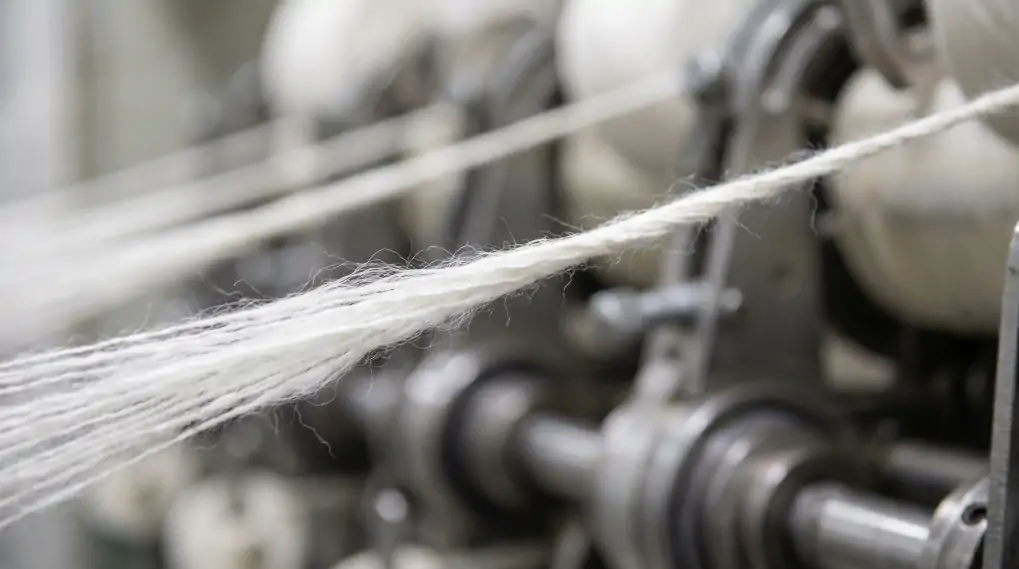
Ring-spun cotton yarn provides superior tensile strength and soft texture for premium towel products
Get Technical Specifications4. Branding Technologies: Permanent Logo Integration
The method of applying brand identification to towels determines both aesthetic impact and long-term durability. Private label towel manufacturer China facilities offer multiple branding technologies, each with distinct characteristics suited to different application scenarios and budget parameters.
High-Density Embroidery vs. Jacquard Weaving
For permanent branding that never fades, Jacquard weaving integrates the logo into the fabric's structural architecture during the weaving process. This technique produces logos that remain crisp through unlimited wash cycles. High-density embroidery remains the gold standard for private label towels wholesale targeted at corporate gifting and premium hospitality applications.
Reactive Printing for High-Volume Promotional Impact
Screen printing and reactive dye processes enable complex multi-color designs at production volumes that make per-unit costs negligible. Private label microfiber towel supplier arrangements often include promotional printing for marketing campaigns, event giveaways, and retail merchandise programs.
Custom Labeling and Woven Brand Tags
Premium finishing extends beyond the towel itself. Woven brand tags, care labels with washing instructions, and hang tags complete the unboxing experience for retail and e-commerce applications. OEM towel production services include comprehensive labeling solutions that meet international textile labeling requirements.
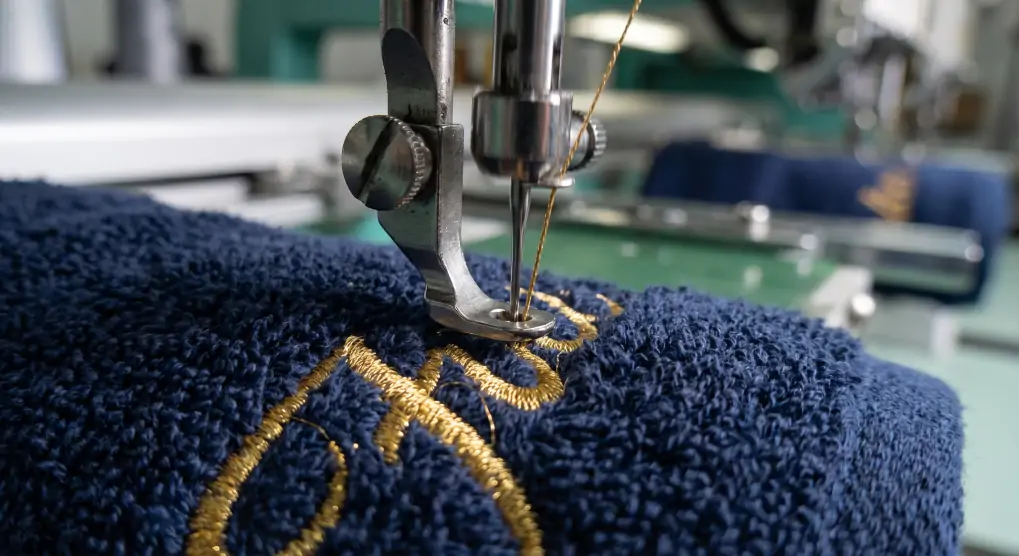
High-density embroidery ensures permanent brand visibility that withstands industrial laundering
Request Branding Options5. Navigating MOQ and Lead Time Constraints in China
Understanding minimum order quantities and production timelines enables effective supply chain planning. Private label towel manufacturer China operations balance manufacturing efficiency with buyer flexibility through tiered MOQ structures and flexible production scheduling.
Understanding Minimum Order Quantity Barriers
The question "What is the MOQ for private label towel manufacturing?" receives different answers based on product complexity. For standard white towels with custom labels, MOQs can be as low as 500 units. However, for custom-dyed yarn or bespoke jacquard patterns, industrial MOQs typically start at 1,000 to 3,000 units to ensure manufacturing efficiency.
Lean Manufacturing and Rapid Prototyping Cycles
Modern production facilities implement lean manufacturing principles that reduce setup times and enable faster changeovers between orders. Private label bamboo towels wholesale programs can initiate with smaller pilot runs to validate quality before scaling to full production volumes.
Peak Season Buffer Management for Global Importers
Global hospitality demand follows predictable seasonal patterns, creating production bottlenecks during peak periods. Strategic inventory planning includes safety stock allocations that buffer against supply chain disruptions. Our production scheduling system accommodates advance ordering with guaranteed capacity reservations.
6. Quality Control Protocols: From Yarn to Finished Product
Comprehensive quality management extends throughout every production stage. Best private label towel factory China operations implement multi-point inspection systems that catch defects before shipment.
In-Line Inspection and AQL 2.5/4.0 Standards
Acceptable Quality Level (AQL) standards define the maximum acceptable defect rate in batch production. Standard commercial linen specifications require AQL 4.0, while premium hospitality products demand AQL 2.5 or tighter. Our in-line inspection systems perform real-time monitoring at every critical production stage.
Tensile Strength and Shrinkage Laboratory Testing
Laboratory testing validates performance characteristics against specifications. Shrinkage testing ensures dimensional stability within ±3% tolerance, while tensile strength measurements confirm structural integrity. High GSM hotel towels wholesale orders undergo rigorous testing protocols to guarantee consistency.
Batch Consistency and Dye-Lot Uniformity
Reorder consistency represents a critical concern for ongoing brand programs. Matching new production runs to previous shipments requires strict dye-lot documentation and color management systems. Spectrophotometric color matching ensures Pantone accuracy across production batches.

Rigorous quality inspection ensures batch-to-batch consistency for bulk towel orders
Download Quality Standards Guide7. Material Innovation: Sustainable and GRS-Certified Fibers
Environmental consciousness increasingly influences procurement decisions. Private label towel manufacturer operations respond to this demand through sustainable material sourcing and third-party certification programs.
The Shift Toward Recycled Polyester (RPET) Blends
Recycled polyester (RPET) derived from post-consumer plastic bottles offers environmental benefits without compromising performance. RPET blend towels achieve comparable durability to virgin polyester while reducing environmental footprint. Corporate sustainability initiatives often mandate minimum recycled content percentages.
Bamboo and Organic Cotton: Meeting ESG Compliance
Private label bamboo towels wholesale options leverage bamboo's natural antimicrobial properties and rapid renewability. Organic cotton cultivation eliminates synthetic pesticide and fertilizer inputs, aligning with ESG reporting requirements. Private label organic cotton towels bulk orders support brand sustainability messaging.
Water-Saving Dyeing Processes for Green Procurement
Traditional dyeing processes consume substantial water resources. Modern facilities implement closed-loop water systems and digital printing technologies that reduce consumption by 60-80%. Wholesale personalized towels for hotels can now specify eco-friendly production without premium pricing.

Sustainable textile options support corporate environmental commitments and ESG reporting
Request Sustainable Options8. Dyeing Technologies: Reactive vs. VAT Dyeing for Longevity
Dye chemistry determines colorfastness performance and long-term appearance retention. Private label microfiber towel supplier arrangements must specify appropriate dyeing methods based on end-use requirements and wash conditions.
Chlorine Resistance in Commercial Pool Towels
Pool-side applications expose towels to chlorinated water and阳光UV radiation that degrade conventional dyes. Chlorine-resistant dyeing processes utilize specialized dye chemistries that maintain color integrity through hundreds of pool-side exposures. High GSM hotel towels wholesale specifications should include chlorine resistance testing for pool facility applications.
Colorfastness Standards for Industrial Bleaching
Commercial laundries employ hydrogen peroxide bleaching to restore whiteness and remove stains. Standard dyeing processes may fade under these conditions. OEM towel production services for hospitality applications require bleaching-resistant colorfastness specifications.
Pantone Matching Systems for Corporate Identity
Brand consistency demands precise color reproduction across all textiles. Spectrophotometric Pantone matching ensures that wholesale personalized towels for hotels match corporate color standards exactly. Delta-E measurements confirm color accuracy within acceptable tolerance ranges.
9. Hemming and Finishing: The Mark of Industrial Quality
Construction quality determines product longevity and professional appearance. Private label towel manufacturer operations implement precise finishing protocols that distinguish premium products from budget alternatives.
Double-Needle Stitched Hems to Prevent Fraying
Double-needle stitching provides reinforced hem construction that prevents unraveling during industrial laundering. Single-needle hems may appear more refined initially but deteriorate rapidly under commercial wash conditions. Bulk custom towels for business applications require double-needle construction as standard specification.
Reinforcement of Dobby Borders and Ends
Decorative borders and dobby patterns require additional reinforcement to maintain structural integrity. Edge binding techniques vary based on design complexity and intended use intensity. Private label organic cotton towels bulk orders benefit from reinforced finishing that extends product lifespan.
Anti-Pilling Treatments for Extended Life-Cycles
Surface pilling develops from mechanical abrasion during washing and use. Anti-pilling finishing treatments chemically stabilize fiber ends to prevent pilling formation. Private label towel manufacturer China facilities apply these treatments as standard protocol for premium product lines.
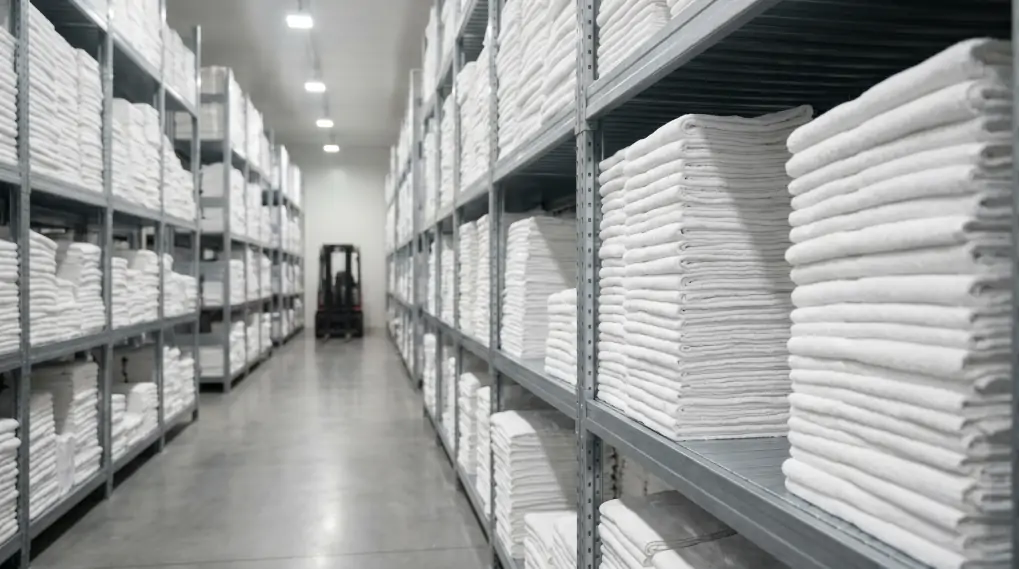
Proper hemming and finishing ensure extended product lifecycle under industrial wash conditions
Request Sample Kit10. Compliance and Global Certification Standards (OEKO-TEX)
International textile standards ensure product safety and manufacturing ethics. Best private label towel factory China operations maintain active certifications that satisfy global procurement requirements.
Navigating REACH and Prop 65 Requirements
REACH compliance governs chemical substances in products sold within the European Union, while California Prop 65 addresses similar concerns for the US market. Private label towel manufacturer operations must document chemical compliance for both regulatory environments.
The Importance of GRS (Global Recycled Standard)
The Global Recycled Standard (GRS) verifies recycled content claims and social responsibility practices throughout the supply chain. Private label bamboo towels wholesale programs seeking GRS certification require comprehensive chain-of-custody documentation from raw material sourcing through finished product.
BSCI and Sedex Social Accountability Audits
Corporate social responsibility programs increasingly require supplier compliance with labor standards. BSCI and Sedex audits verify ethical manufacturing practices, worker compensation, and workplace safety conditions. OEM towel production services for major brands typically require active audit participation.
11. Logistics and Supply Chain Optimization for Warehouse Owners
Efficient logistics management minimizes landed costs and ensures timely inventory replenishment. Private label towel manufacturer China partnerships include comprehensive logistics support.
Container Loading and Volumetric Efficiency
Ocean freight costs depend on volumetric weight calculations. Optimizing container loading efficiency reduces per-unit shipping costs significantly. Standard 20-foot containers accommodate 15,000-20,000 assembled towels depending on GSM and packaging configuration.
Freight Forwarding: FOB vs. DDP Strategies
FOB (Free on Board) pricing places shipping responsibility on the buyer, while DDP (Delivered Duty Paid) includes all import costs. Private label microfiber towel supplier arrangements should clarify shipping terms to avoid unexpected cost exposure.
Safety Stock Management for High-Turnover Distribution
Warehouse operations managing high-volume towel distribution require calculated safety stock levels. Lead time variability, demand forecasting accuracy, and supplier reliability all factor into optimal inventory buffers. High GSM hotel towels wholesale programs benefit from vendor-managed inventory partnerships.
12. Strategic Vendor Management for Long-Term Growth
Building sustainable supplier relationships creates competitive advantages beyond transactional pricing. Best private label towel factory China partnerships evolve into strategic alliances that drive mutual growth.
Evaluating Factory Capacity and Machine Technology
Production capability assessment includes equipment specifications, workforce expertise, and operational efficiency metrics. OEM towel production services evaluation should include factory audits that verify capacity claims against documented evidence.
Transparent Pricing: Beyond the Per-Unit Quote
Total cost of ownership encompasses more than unit pricing. Hidden costs include quality failures, reorders, expediting fees, and inventory carrying costs. Transparent supplier partnerships reveal all cost components to enable accurate comparison.
Building Collaborative R&D for Future Textile Lines
Innovative product development requires collaborative engineering relationships. Private label towel manufacturer partnerships that include R&D collaboration enable exclusive product development that differentiates brands in competitive markets.
Start Partnership DiscussionProduct Technical Parameters (EAV Model)
| Parameter | Specification | B2B Impact |
|---|---|---|
| Material Base | 100% Combed Cotton / Bamboo / RPET | Durability & ESG Compliance |
| Yarn Count | 16s/1, 21s/2, 32s/2 Ring Spun | Tensile Strength & Softness |
| Weight (GSM) | 300 - 900 GSM | Absorbency & Operational Weight |
| Branding | Jacquard / Embroidery / Embossing | Brand Integrity & Longevity |
| Color Fastness | Grade 4.0+ (ISO 105-B02) | Wash Resistance & UV Stability |
| Hemming | Double-Needle Stitch / Overlock | Lifecycle Longevity |
Frequently Asked Questions
Q: What is the typical MOQ for a private label towel manufacturer China order?
For standard white towels with custom labels, MOQs can be as low as 500 units. However, for custom-dyed yarn or bespoke jacquard patterns, industrial MOQs typically start at 1,000 to 3,000 units to ensure manufacturing efficiency and cost-effectiveness for bulk orders.
Q: How do you prevent shrinkage in bulk hospitality towel orders?
We utilize a pre-shrinking process during the bleaching and dyeing phase. Our towels are engineered to maintain a dimensional stability of ±3%, exceeding the standard AQL requirements for commercial linens. This ensures consistent sizing after multiple industrial wash cycles.
Q: Can your factory handle dropshipping for e-commerce private labels?
While our focus is on high-volume bulk pricing for warehouses, we offer 3PL-compatible packaging and barcoding for regional distribution centers, allowing for streamlined logistics and efficient order fulfillment across multiple channels.
Q: What certifications does your factory maintain?
Our facilities maintain OEKO-TEX Standard 100, GRS (Global Recycled Standard), BSCI, and Sedex certifications. We also comply with REACH and California Prop 65 requirements for European and US market access.
Q: How do you ensure color consistency across reorders?
We utilize spectrophotometric color matching with Delta-E measurements confirming accuracy within 1.0 tolerance. Each production batch maintains comprehensive dye-lot documentation to ensure exact color matching for reorders.
Secure Your Brand's Legacy with Industrial-Grade Textiles
Don't let supply chain volatility erode your brand's reputation. Partner with a private label towel manufacturer China that understands the technical demands of the hospitality and industrial sectors. Our OEM programs are designed for scale, durability, and brand precision.
| Custom Towel Manufacturer | B2B Textile Solutions
Related Resources: Custom Towels Wholesale OEM ODM Manufacturing | World Towels News & Knowledge