Beach Towel Manufacturing Guide: Complete Guide to Sourcing Premium Beach Towels with Custom Prints and Sustainable Materials
For industrial buyers and warehouse managers, sourcing high-quality beach towels often means navigating a minefield of inconsistent GSM (Grams per Square Meter), fading prints, and opaque supply chains. This comprehensive guide eliminates the guesswork by detailing technical manufacturing standards, sustainable material innovations, and streamlined OEM workflows. We provide the roadmap to securing high-performance, branded inventory that meets international compliance without the retail markup.
1. The Landscape of Global Beach Towel Manufacturing
Industrial Sourcing vs. Retail Procurement
Procurement at scale requires a shift from transactional buying to strategic partnership. For a custom beach towel manufacturer, the focus is on throughput and consistency. While retail focuses on aesthetics, industrial sourcing prioritizes fiber length, tensile strength, and colorfastness ratings under high-UV exposure.
The global beach towel market continues to expand as hospitality brands, promotional companies, and retail chains seek reliable bulk pricing structures. Understanding the distinction between industrial-grade manufacturing and retail-ready production determines the success of your supply chain strategy.
Understanding the OEM/ODM Framework
OEM (Original Equipment Manufacturing) allows brands to utilize existing factory templates with their own branding. This approach minimizes development time and reduces initial investment for companies entering the beach textile market. ODM (Original Design Manufacturing) involves collaborative product development, creating bespoke weaves or dimensions from the yarn up.
For B2B buyers, selecting between OEM and ODM depends on brand differentiation requirements and budget allocation. Our OEM/ODM services page provides detailed consultation on which model aligns with your business objectives.

Navigating the China Sourcing Ecosystem
Direct factory access in textile hubs ensures shorter lead times and more competitive bulk pricing. By bypassing trading companies, warehouse owners gain direct control over the quality assurance (QA) pipeline. China remains the dominant force in textile manufacturing, offering advanced machinery and skilled labor that produces consistent results across million-unit runs.
Our manufacturing facilities in strategic textile clusters enable us to maintain strict quality protocols while offering industry-leading pricing for wholesale towel orders.
Strategic Insight
Partnering directly with manufacturers eliminates 15-30% in intermediary markups, enabling competitive pricing without sacrificing quality standards.
2. Material Science: Selecting the Right Substrate
Long-Staple Cotton and Terry Loop Engineering
The foundation of any premium beach towel begins with raw material selection. Long-staple cotton, characterized by fibers exceeding 1.5 inches, produces smoother, stronger yarn that resists pilling and maintains structural integrity through hundreds of wash cycles. The terry loop construction, where uncut loops cover both surfaces, maximizes absorbency while providing a plush tactile experience.
For custom beach towel manufacturer operations, we source premium cotton from certified growers ensuring consistent fiber length and whiteness. The GSM (Grams per Square Meter) specification directly correlates to loop density and pile height, determining both performance characteristics and production costs.
The Rise of GRS-Certified Recycled Polyester
Sustainability has become a non-negotiable requirement for modern procurement departments. GRS (Global Recycled Standard) certification ensures that recycled polyester derives from verified post-consumer plastic bottles, reducing environmental footprint while maintaining performance specifications. A single beach towel manufactured from recycled materials can utilize 15-20 plastic bottles diverted from landfills.
Our sustainable textiles collection showcases options for brands prioritizing environmental responsibility without compromising on quality or durability.
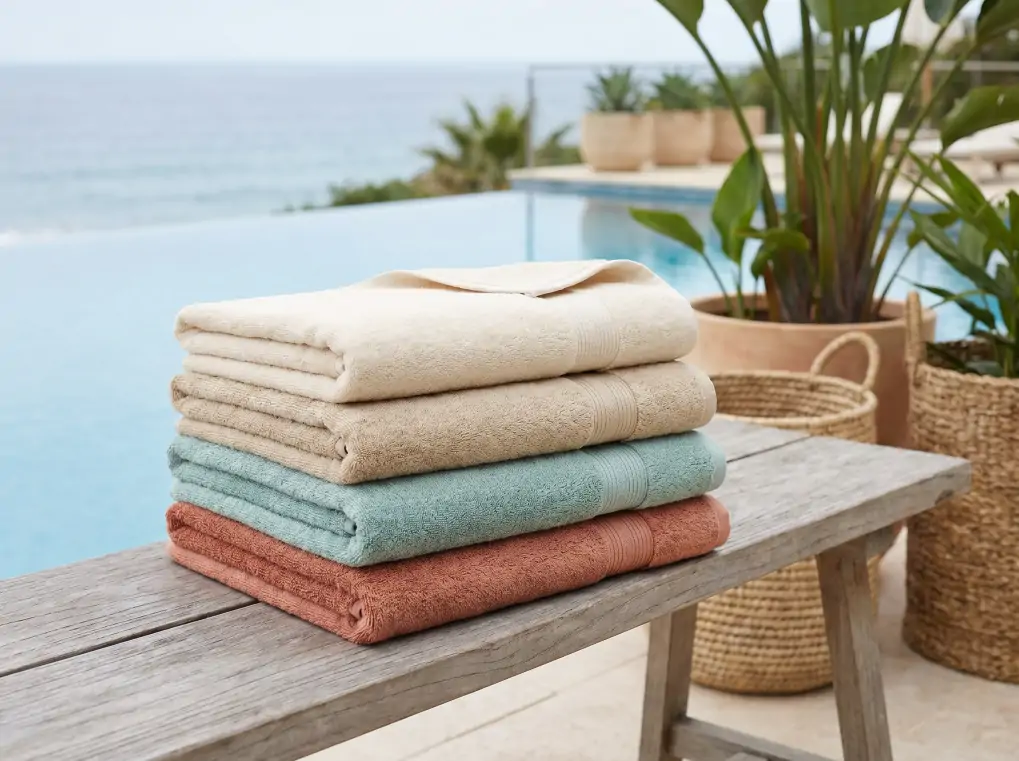
High-Performance Microfiber for Sand-Free Applications
Microfiber beach towels represent an innovative category gaining traction in the premium market segment. Comprising ultra-fine polyester and polyamide fibers, these towels feature rapid drying capabilities and naturally sand-resistant properties. The tight weave construction prevents sand penetration, making them ideal for beach clubs, cruise lines, and family resorts.
3. Advanced Printing Technologies for Bulk Production
Reactive Printing for Deep Fiber Penetration
Reactive dye printing represents the gold standard for cotton textile decoration, offering exceptional colorfastness through chemical bonding between dye molecules and cellulose fibers. This technology achieves vibrant, wash-resistant prints that maintain visual appeal through 200+ wash cycles, making it ideal for hospitality linens and premium retail products.
The process involves pre-treating fabric with alkali solutions before print application, followed by steam fixation and thorough washing. For private label textile factory operations, reactive printing provides the durability required for commercial laundry conditions.
Digital Sublimation for Complex Photographic Designs
Digital sublimation printing enables photographic-quality reproduction on polyester-based substrates, including microfiber beach towels. The process converts solid dye particles into gas under high temperature, permanently bonding colors within the fiber structure. Complex gradients, photographic images, and intricate brand logos render with exceptional clarity.
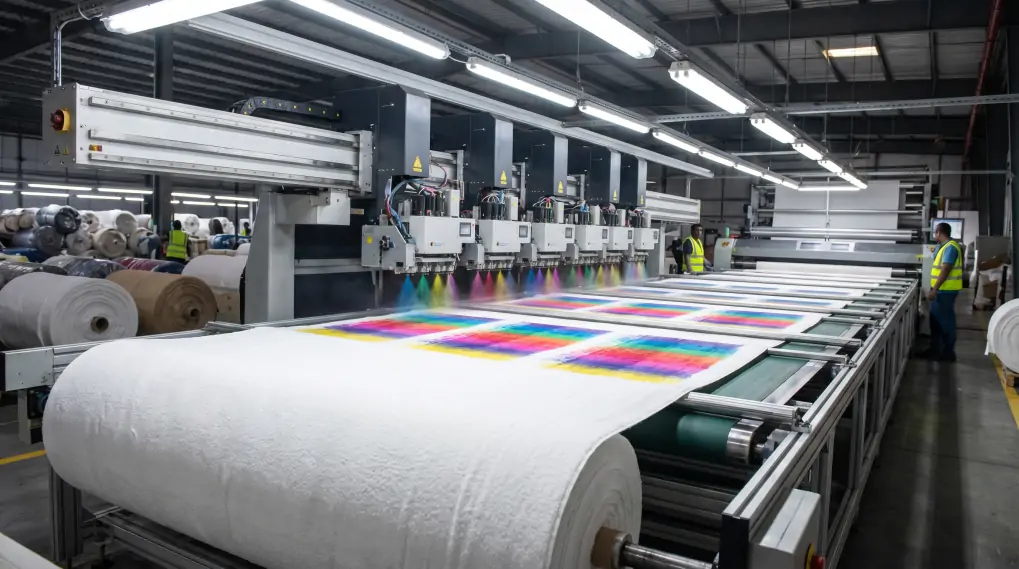
Rotary Screen Printing for High-Volume Efficiency
For bulk beach towels wholesale orders exceeding 5,000 units, rotary screen printing delivers unmatched production efficiency. Cylindrical screens rotate continuously while squeegees force ink through mesh openings, achieving speeds up to 40 meters per minute. This technology suits simple, repetitive designs requiring consistent color application across large quantities.
4. Technical Specifications: The EAV Model of Towel Quality
Understanding the technical parameters governing beach towel manufacturing enables procurement professionals to specify requirements accurately and evaluate supplier capabilities.
| Parameter | Specification | B2B Impact |
|---|---|---|
| Material Base | 100% Cotton / Recycled Polyester Blend | Durability vs. Sustainability positioning |
| Weight (GSM) | 350 GSM - 600 GSM | Premium feel and absorbency |
| Printing Method | Reactive / Sublimation / Jacquard | Aesthetic longevity |
| Colorfastness | Grade 4.0+ (ISO 105-B02) | UV and Chlorine resistance |
| Standard Sizes | 70x140cm, 80x160cm, 100x180cm | Logistics and market fit |
| Certifications | OEKO-TEX, GRS, BSCI | Compliance for EU/US markets |
| Yarn Count | 21s / 32s Single or Double Ply | Softness and durability balance |
| Loop Height | 4mm - 7mm Terry Loop | Absorbency capacity |
GSM (Grams per Square Meter) Logic
The GSM measurement directly correlates to towel quality and production cost. 350-400 GSM represents the sweet spot for beach towels, offering optimal balance between absorbency, drying time, and weight for shipping efficiency. Premium spa-grade towels may specify 500-600 GSM, though increased weight affects laundry handling and drying cycles.
Yarn Counts and Weave Density (21s vs 32s)
Yarn count notation indicates fiber thickness, with higher numbers representing finer threads. 32s cotton produces softer, silkier towels ideal for luxury positioning, while 21s yarn creates more robust products suited for high-volume commercial use. Double-ply construction enhances durability without increasing weight proportionally.
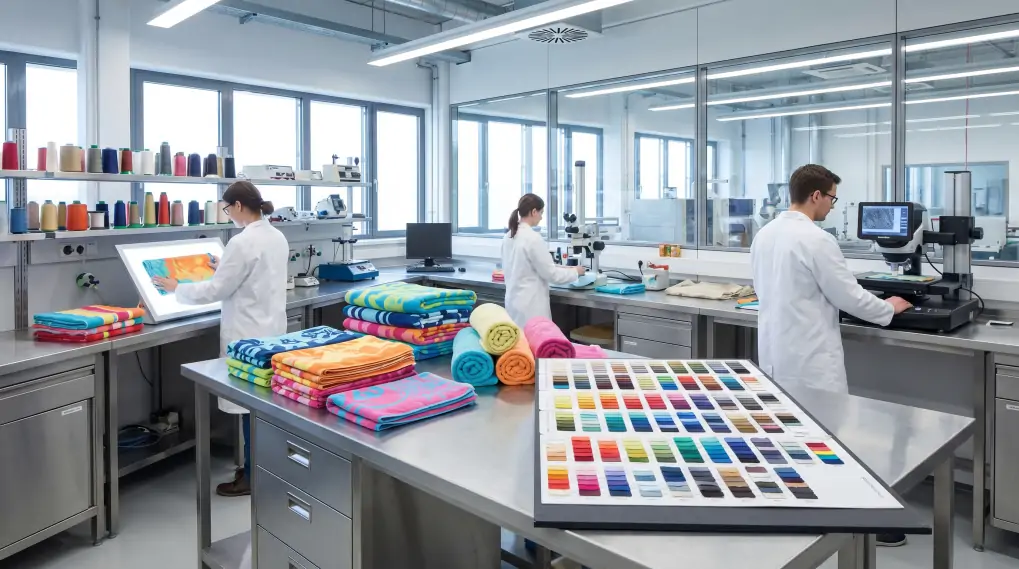
Double-Stitched Hems and Industrial Finishing
Double-stitched hems prevent unraveling during commercial laundering, extending product lifespan and maintaining brand presentation. Our manufacturing process includes automated hemming with reinforced thread, ensuring consistency across million-unit production runs.
5. Sustainable Manufacturing and ESG Compliance
Water-Saving Dyeing Processes
Traditional textile dyeing consumes approximately 150 liters of water per kilogram of fabric. Our facilities employ closed-loop water recycling systems and advanced dye fixation technology, reducing water consumption by 60%. Air-pollution-free dyeing (APD) processes eliminate wastewater discharge concerns entirely.
OEKO-TEX Standard 100 and REACH Compliance
OEKO-TEX Standard 100 certification guarantees that every component of our beach towels, from yarn to finished product, has been tested for over 100 harmful substances. For OEKO-TEX certified towel factory operations, this certification opens European and North American retail markets while demonstrating corporate responsibility.
Ethical Labor Standards in Modern Textile Plants
BSCI (Business Social Compliance Initiative) and Sedex audits verify ethical labor practices throughout our supply chain. Fair wage compensation, safe working conditions, and prohibition of child or forced labor form the foundation of our manufacturing philosophy.
Sustainable Materials
GRS-certified recycled polyester from post-consumer plastic bottles
Water Conservation
60% reduction through closed-loop recycling systems
Certifications
OEKO-TEX, GRS, BSCI, and REACH compliant production
6. Design for Manufacturing (DFM) in Textiles
Vector Art Preparation for Large Format Prints
Optimal print quality requires vector artwork files (AI, EPS, or PDF formats) with minimum 300 DPI resolution at actual size. Our pre-press team reviews submitted artwork, identifying potential issues with color separation, gradient banding, or fine text that may not reproduce clearly at production scale.
Pantone Color Matching (TCX vs. PMS)
For brand consistency, we match colors using Pantone Matching System (PMS) references. Pantone TCX (Cotton) swatches provide the most accurate specification for textile products, ensuring your brand colors render identically across cotton, microfiber, and blended substrates.
Bleed Areas and Border Constraints in Weaving
Custom woven beach towels require consideration of border constraints inherent to terry loom production. Minimum 2cm unprinted borders at all edges accommodate hemming operations. Our design team provides template files with marked safe zones, ensuring your artwork prints completely without edge truncation.
7. The Logistics of Bulk Procurement and MOQs
Tiered Pricing Structures Based on Volume
Our tiered pricing model rewards volume commitment with progressively improved unit economics. Orders exceeding 5,000 units receive volume discounts of 12-18% compared to initial MOQ pricing. For bulk beach towels wholesale inquiries exceeding 20,000 units, custom pricing negotiations open additional value opportunities.
| Order Quantity | Unit Price Index | Lead Time |
|---|---|---|
| 1,000 - 2,499 units | 100% (Base MOQ) | 25-30 days |
| 2,500 - 4,999 units | 92% of base | 28-32 days |
| 5,000 - 9,999 units | 85% of base | 30-35 days |
| 10,000+ units | Custom pricing | 35-45 days |
Negotiating MOQs (Minimum Order Quantities)
The MOQ for custom printed textile manufacturing balances production efficiency against buyer flexibility. Standard reactive print orders commence at 1,000 units per design, while digital printing enables 300-500 unit runs for market testing. Our flexible MOQ program accommodates growing brands requiring lower initial commitments.
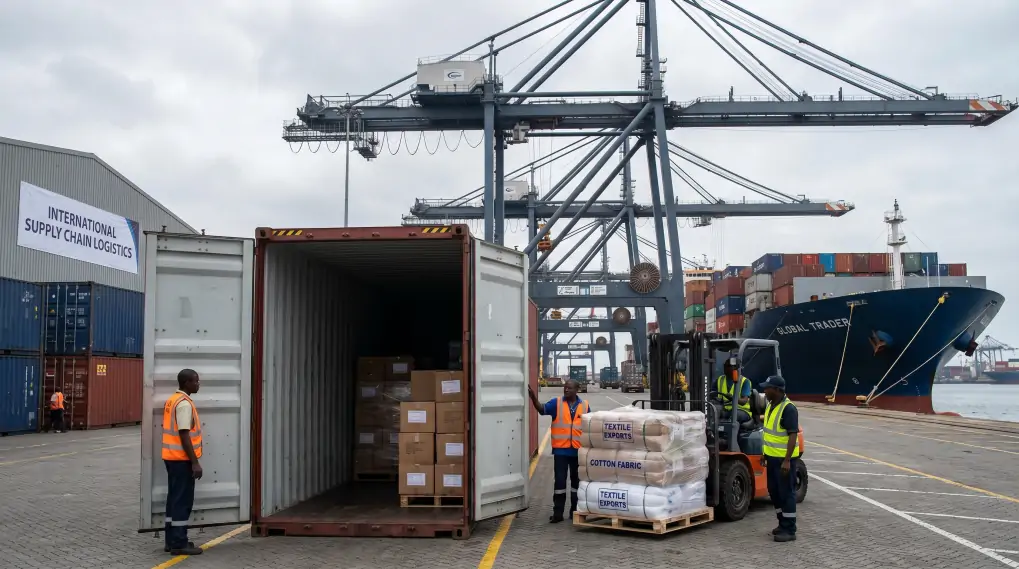
Container Loading and Volumetric Optimization
Maximizing container utilization reduces per-unit shipping costs significantly. A standard 20-foot container accommodates approximately 8,000-10,000 beach towels (depending on dimensions and packaging), while 40-foot containers handle 18,000-22,000 units. Our logistics team optimizes carton dimensions and pallet arrangements to minimize dimensional weight charges.
8. Quality Control Protocols in the Factory
Pre-Production Sample (PPS) Approval Workflows
Before mass production begins, we manufacture pre-production samples for client approval. This critical checkpoint verifies color accuracy, GSM specifications, dimensions, and overall construction quality. Clients in North America and Europe typically receive samples within 7-10 days of order confirmation via express shipping.
In-Line Inspection and AQL 2.5/4.0 Standards
During production, our quality team conducts in-line inspections at critical checkpoints, employing AQL (Acceptable Quality Level) sampling protocols. Standard commercial tolerance allows maximum 2.5% defect rate for minor issues and 1.0% for major defects. Premium orders may specify tighter AQL 1.5/2.5 standards.
Third-Party Lab Testing for Absorbency and Pilling
For technical verification, we engage accredited third-party laboratories (SGS, Bureau Veritas, Intertek) to conduct absorbency, colorfastness, dimensional stability, and pilling resistance testing. Test reports accompany each production batch, providing documentation for retail compliance and liability protection.

9. Custom Branding and Private Label Packaging
Woven Labels and Heat-Transfer Branding
Professional woven labels sewn into the towel hem communicate brand identity with permanence. Damask weaving produces sharp, detailed logos readable at small sizes. Heat-transfer branding offers a cost-effective alternative for simple designs, though durability through repeated washing may be reduced compared to woven options.
Biodegradable Polybags and Retail-Ready Displays
Consumer-facing products benefit from retail-ready packaging that enhances brand perception. We offer oxo-biodegradable polybags meeting EU packaging regulations, swing tags with barcode labels, and custom hang-tags printed on recycled cardstock. Display-ready inner cartons facilitate efficient shelf stocking at retail locations.
Custom Hang-Tags and Barcoding for Distribution Centers
For private label beach towels destined for distribution centers, we provide GS1-compliant barcode labels integrated into hang-tag designs or direct printing on care labels. RFID-enabled tags facilitate inventory tracking throughout supply chain operations.
Packaging Options
- Individual biodegradable polybags
- Custom hang-tags with barcode integration
- Retail-ready inner cartons
- Pallet configurations for warehouse racking
10. Managing Lead Times and Production Cycles
Seasonal Peak Planning for Beach Season
The beach towel industry follows pronounced seasonal demand patterns, with order volumes peaking October through January for spring/summer retail availability. Proactive buyers place orders 4-6 months ahead to secure production slots during capacity-constrained periods. Our sales team provides rolling availability updates to support demand forecasting.
Rapid Prototyping vs. Mass Production Timelines
Rapid prototyping services enable sample production within 5-7 days for design validation before committing to full production runs. This approach reduces risk for new product launches by confirming product performance and print quality before capital commitment.
Buffer Management for International Shipping
International logistics introduces variability requiring strategic buffer inventory. We recommend ordering 10-15% overage to accommodate transit damages, quality claims, and demand variability. Our warehouse facilities offer consignment programs maintaining safety stock at destination markets for immediate replenishment.
| Production Phase | Duration | Activities |
|---|---|---|
| Sample Approval | 7-20 days | Artwork prep, sample production, client review |
| Bulk Production | 20-50 days | Material sourcing, dyeing, printing, cutting, sewing |
| Quality Inspection | 3-5 days | AQL sampling, defect sorting, testing |
| Packaging & Export | 5-7 days | Polybagging, carton packing, container loading |
| Ocean Freight | 20-55 days | Transit to destination port |
11. Overcoming Common Procurement Bottlenecks
Solving Color Variance in Batch Dyeing
Color variance between production batches frustrates brand managers expecting consistent product appearance. Our solution involves maintaining dedicated dye recipes in our color library, color-matching each batch against master references under standardized D65 lighting. Every shipment includes laboratory reports documenting Delta E measurements confirming color accuracy within acceptable tolerance.
Addressing Edge Curling and Dimensional Stability
Dimensional instability causing shrinkage or edge curling after laundering undermines product quality perception. Our production process incorporates pre-shrunk finishing treatments and gentle tumble drying protocols that minimize post-wash distortion. Customers receive care instruction guides optimized for commercial laundry conditions.
Managing Communication Gaps with Technical Data Sheets
Clear specification communication prevents costly misunderstandings. We provide comprehensive technical data sheets documenting GSM, dimensions, colorfastness ratings, washing instructions, and packaging requirements. Multilingual support (English, Spanish, German, French) facilitates efficient communication with global procurement teams.
12. Strategic Partnering for Long-Term Growth
Moving Beyond the "Vendor" Relationship
Successful B2B towel procurement transcends transactional purchasing, evolving into strategic partnership arrangements. Long-term partnerships unlock reserved production capacity during peak seasons, priority access to new material innovations, and collaborative product development opportunities. Our account management team functions as an extension of your procurement operation.
Implementing VMI (Vendor Managed Inventory)
Vendor Managed Inventory (VMI) programs shift inventory responsibility to our logistics network, ensuring optimal stock levels without procurement team intervention. Real-time sales data integration enables automatic replenishment triggering, reducing stockout incidents while minimizing excess inventory carrying costs.
Future Trends: Smart Textiles and UV-Reactive Inks
The future of beach textiles includes innovative technologies such as UV-reactive inks that indicate sun exposure intensity, embedded aromatherapy microcapsules releasing scent through use, and moisture-wicking coatings for performance applications. Our R&D team continuously evaluates emerging technologies for potential integration into your product lines.
Dedicated Account Management
Personalized support for strategic partnership accounts
VMI Programs
Automated inventory replenishment reducing procurement workload
Innovation Pipeline
Early access to emerging textile technologies
Frequently Asked Questions
Q: What is the standard MOQ for a custom logo beach towel wholesale order?
For standard sizes using reactive printing, the industrial MOQ typically starts at 1,000 units per design. For digital printing or stock colors, lower MOQs of 500 units may be possible under specific OEM programs.
Q: How do you ensure color consistency across a 10,000-unit bulk order?
We utilize computerized color matching systems and maintain strict Lot control. Every batch is compared against the approved master sample under D65 lighting to ensure a variance of less than Delta E < 1.0.
Q: What are the typical lead times for private label beach towels?
Standard production cycles range from 25 to 35 days following sample approval. Shipping via sea freight adds approximately 20-50 days depending on the destination port.
Q: What GSM specifications are recommended for premium beach towels?
For luxury beach towels, we recommend 400-600 GSM for superior absorbency and plush feel. Mid-range options at 350-400 GSM offer excellent balance between quality and cost efficiency for high-volume orders.
Q: Do you provide OEKO-TEX certified materials?
Yes, we offer OEKO-TEX Standard 100 certified materials ensuring all our beach towels are free from harmful substances. Our facility also holds GRS certification for recycled polyester products.
Maximize Your Inventory ROI with Direct-to-Factory Sourcing
Don't let middleman markups and inconsistent quality erode your margins. Whether you are expanding a hospitality brand or stocking a national warehouse, our OEM/ODM beach towel programs offer the technical precision you require.
Request a Technical QuoteReady to Source Premium Custom Beach Towels?
Our production engineers specialize in custom beach towel manufacturing solutions for B2B procurement professionals. From initial concept through delivery, we provide end-to-end support ensuring your private label program succeeds.
Request a Technical Quote
Speak with our production engineers for detailed bulk pricing and production timelines.
Order a Sample Kit
Experience our GRS-certified sustainable fabrics and printing capabilities firsthand.
Consult on Design
Let our textile designers optimize your vector files for high-speed production.