The Engineering of Jacquard Towel Production: A Masterclass in Permanent Logo Integration for Global Sourcing
Standard printed logos fail within weeks of industrial laundering. Screen printing cracks, peels, and fades under the relentless demands of hospitality environments, corporate gyms, and promotional events. If you're a procurement manager, factory owner, or branding executive still dealing with inferior logo retention, this comprehensive guide reveals the engineering solution that global five-star hotels have trusted for decades: jacquard weaving technology. By the end of this masterclass, you'll understand exactly how permanent logo integration works, how to scale production for bulk orders, and how to select the right custom jacquard towels manufacturer for your supply chain.
1. Understanding the Mechanics of Jacquard Weaving Technology
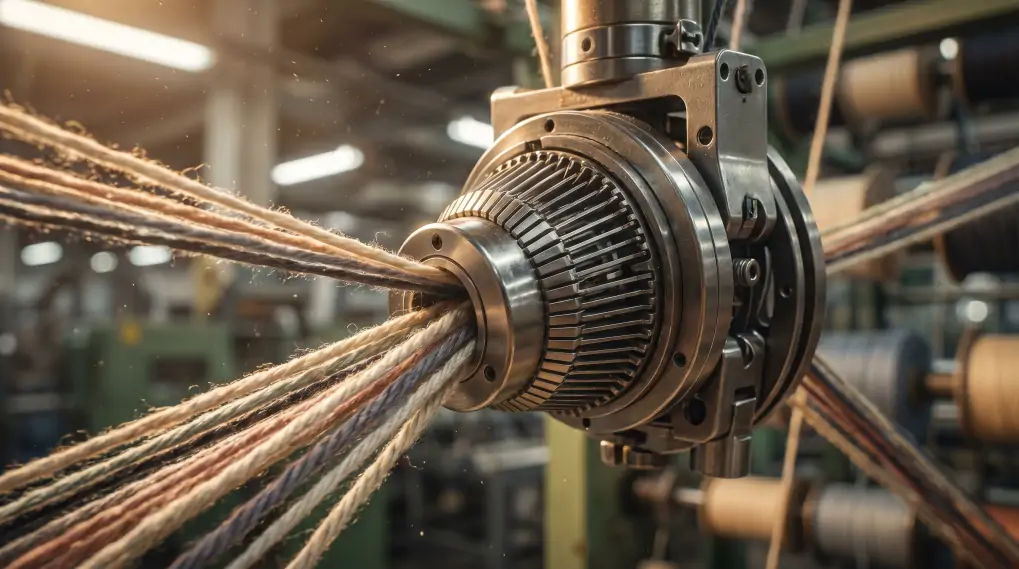
The jacquard weaving system represents one of the most significant advances in textile manufacturing history. Unlike conventional looms that rely on mechanical limitations, electronic jacquard heads grant manufacturers unprecedented control over individual warp threads, enabling the creation of complex, high-resolution patterns directly woven into the fabric structure.
The Evolution from Dobby to Jacquard Systems
Traditional dobby looms operate within strict geometric constraints, capable of producing simple stripes, checks, and basic repeating patterns. The jacquard system, named after its inventor Joseph Marie Jacquard, fundamentally changed textile production by utilizing punched cards to control warp thread elevation. Modern electronic iterations have refined this concept into a computer-controlled masterpiece: each needle in a jacquard head operates independently, allowing for photographic-quality imagery, intricate corporate logos, and sophisticated gradients that are physically embedded within the towel's terry cloth structure rather than applied as surface decoration.
Electronic Control and Pattern Data Integration
Our production facilities utilize high-speed electronic jacquard heads operating in conjunction with advanced CAD software platforms. This integration transforms digital artwork into machine instructions with remarkable precision—every pixel of your brand's artwork translates directly into a woven loop configuration. For OEM program clients, this means that design integrity remains consistent across production runs of 100,000+ units, ensuring brand consistency at scale that simply cannot be achieved through printing or embroidery methods.
Warp and Weft Synchronization for Structural Integrity
Jacquard weaving isn't merely about aesthetic achievement—it delivers measurable mechanical advantages. The precise interlacing of warp and weft yarns at engineered intervals creates a fabric structure with exceptional dimensional stability and resistance to snagging. Towels produced through jacquard weaving maintain their original dimensions and pile integrity through hundreds of industrial laundry cycles, making them the preferred choice for hospitality environments where longevity directly impacts procurement budgets.
2. Why Permanent Logo Integration Beats Surface Printing
The fundamental limitation of surface printing technologies becomes apparent within the first industrial wash cycle. Whether screen printing, heat transfer, or direct-to-garment processes, all surface applications share a critical vulnerability: they sit atop the fabric rather than within it.
Eliminating Fading and Cracking in Industrial Use
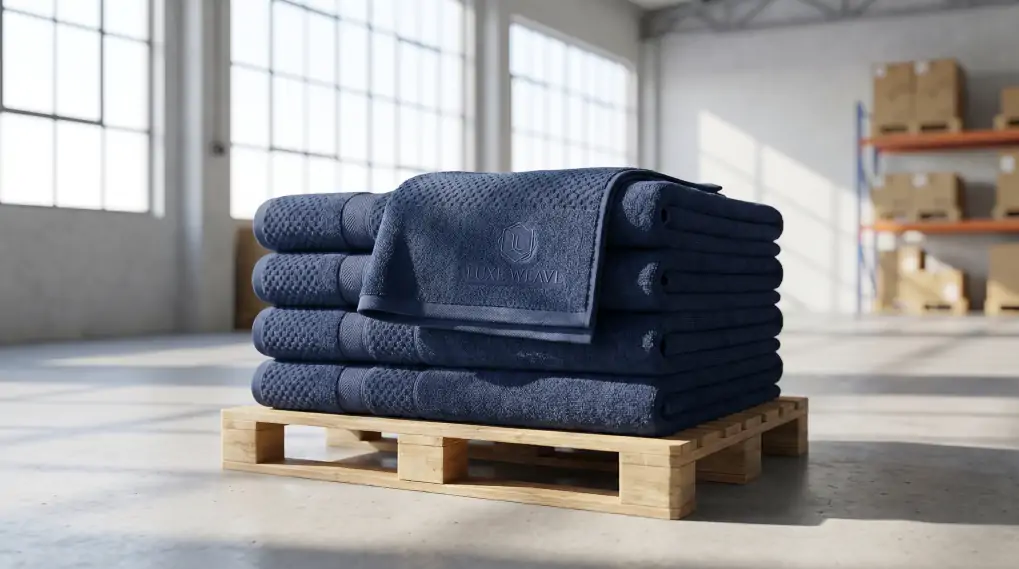
Yarn-dyed fibers used in jacquard weaving carry their color molecules within the cotton structure itself, bonded during the dyeing process before weaving even begins. This intrinsic coloring cannot flake, crack, or peel because the logo pattern is literally woven into the towel's DNA. When hospitality procurement officers specify requirements for bleach-resistant branding, jacquard is the non-negotiable standard. Exposure to chlorine bleach, high-temperature drying, and aggressive industrial laundering cycles leaves jacquard logos visually indistinguishable from their first-day appearance, even after years of service.
Superior Hand-Feel and Texture Contrast
The jacquard weaving process enables designers to create "high-low" pile effects by varying terry loop heights across the pattern area. This technical capability transforms flat logos into tactile three-dimensional elements that users can feel, adding perceived value and quality that distinguishes your brand in competitive hospitality markets. The dimensional texture of jacquard logos provides a sensory quality that no printing technology can replicate, enhancing the overall perception of product quality and attention to detail.
Enhanced Absorbency Across the Branding Area
Surface printing methods, particularly screen printing with plastisol inks, create a semi-impermeable barrier on the fabric surface that reduces absorbency in the printed area. Jacquard weaving preserves 100% breathability and water absorption throughout the entire towel surface, including logo regions. For end-users, this means consistent performance whether they use the branded center section or the border areas—no compromised functionality, no reduced absorbency, just pure textile utility enhanced by permanent branding.
3. Material Science for High-End Jacquard Production
The jacquard weaving process demands premium raw materials to achieve its full potential. Without proper fiber selection, even the most sophisticated loom programming cannot compensate for deficiencies in yarn quality. Understanding the material specifications enables procurement officers to specify requirements that ensure consistent quality across supplier quotations.

Long-Staple Combed Cotton for Durability
Egyptian cotton and Supima cotton represent the gold standard for jacquard towel production, characterized by fiber staple lengths exceeding 40mm. The combed yarn preparation process removes short fibers and impurities, resulting in stronger, smoother, and more consistent yarn bundles. Long-staple cotton delivers measurable improvements in tensile strength, reduced pilling tendency, and enhanced color retention after repeated laundering. For high-frequency hospitality applications where towels undergo daily industrial washing, the marginal cost premium for premium cotton varieties translates directly into extended product lifespan and reduced replacement frequency.
Zero-Twist Yarn for Maximum Softness and Pile
Zero-twist yarn technology represents a significant advancement in hotel linen comfort. By maintaining yarn bundles in an untwisted state throughout the weaving process, manufacturers achieve maximum pile height and exceptional softness that rivals the finest luxury accommodation standards. The untwisted structure creates more surface area for water absorption, improving functional performance while simultaneously enhancing tactile appeal. Premium zero-twist jacquard towels maintain their plush hand-feel even after extended service life, resisting the stiffening effect that plague lower-quality alternatives.
Sustainable Options: GRS Recycled Polyester and Bamboo Blends
Environmental, Social, and Governance (ESG) reporting requirements increasingly influence corporate procurement decisions. Modern jacquard production accommodates sustainable material specifications through Global Recycled Standard (GRS) certified polyester and bamboo fiber options. Recycled PET (rPET) derived from post-consumer plastic bottles undergoes rigorous chain-of-custody verification to qualify for GRS certification, enabling brands to communicate concrete sustainability achievements. Bamboo fibers provide inherent antibacterial properties while maintaining biodegradability, offering a premium sustainable alternative that appeals to eco-conscious hospitality brands and corporate wellness programs.
4. The Yarn-Dyeing Process: Color Consistency at Scale
Color consistency across production batches represents one of the most challenging aspects of textile manufacturing at scale. For brand owners, a visible color shift between order quantities or delivery shipments creates unacceptable brand inconsistency. The yarn-dyeing process employed in quality jacquard production addresses these concerns through controlled chemistry and rigorous quality protocols.
Reactive Dyeing for Vibrant, Bleach-Safe Colors
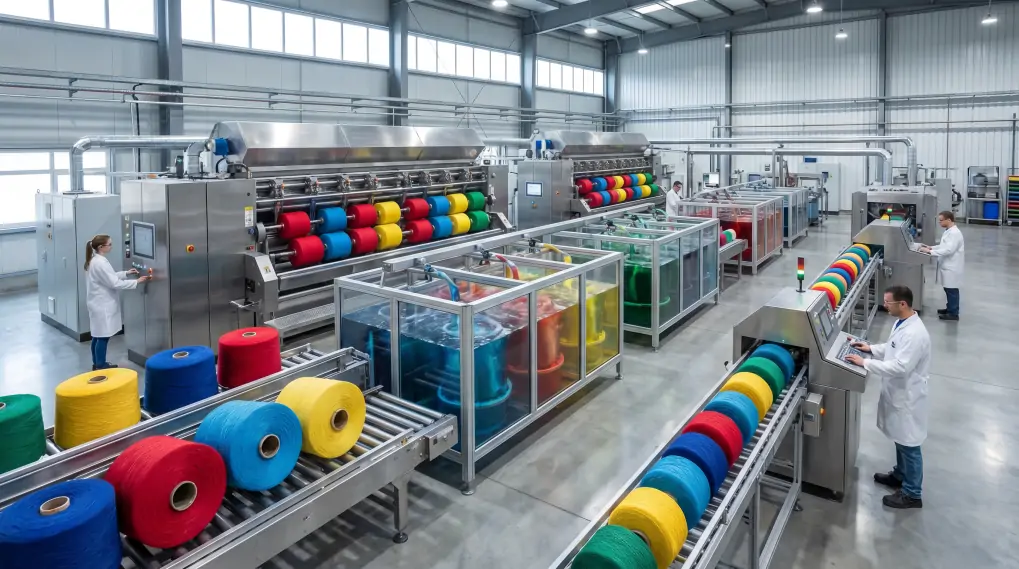
Reactive dyeing creates a permanent chemical bond between dye molecules and cotton cellulose fibers, achieving wash fastness ratings of Grade 4-5 under ISO 105-C06 testing protocols. Unlike direct dyes that wash out readily, reactive dyes form covalent bonds that withstand repeated exposure to harsh laundry chemicals, including chlorine bleach at manufacturer-recommended dilution ratios. For hospitality environments where bleach-based sanitation is standard practice, reactive-dyed jacquard towels provide the colorfastness that printed alternatives fundamentally cannot match.
Lab-Dip Testing and Pantone Color Matching
Brand identity consistency requires precise color matching against corporate Pantone specifications. Professional jacquard manufacturers provide physical lab-dip samples for buyer approval before committing to production, ensuring that the yarn color achieves the target specification within a Delta-E tolerance of less than 1.0—a difference imperceptible to the human eye under standard lighting conditions. Lab-dip approval creates a documented reference standard against which production batches are verified, providing procurement officers with documented quality assurance that satisfies corporate brand guidelines and hospitality brand standards alike.
Bulk Dyeing Efficiency for Cost Optimization
Beam dyeing technology enables efficient bulk processing of yarn packages in batches of 500kg or larger, reducing per-unit dyeing costs while improving batch consistency. Modern dyeing facilities implement dye bath recycling systems that capture and reuse residual dye chemicals, reducing both material costs and environmental impact. For bulk order procurement, the efficiency advantages of beam dyeing translate directly into competitive unit pricing without compromising color quality or fastness performance.
5. OEM/ODM Program Development for Corporate Branding
Original Equipment Manufacturing (OEM) and Original Design Manufacturing (ODM) programs enable brands to develop proprietary towel products without capital investment in manufacturing infrastructure. Effective program development requires understanding the transition from design concept to production-ready specifications.

Transitioning from Design Mockups to Woven Samples
The journey from artwork file to production-ready sample typically spans 15-21 days, encompassing artwork vectorization, jacquard card or electronic file programming, sample loom setup, and physical sample production and evaluation. This process identifies potential design challenges early—gradient limitations, minimum detail requirements, and color separation feasibility—before committing to bulk production. Professional manufacturers provide sample approval cycles that enable brand managers to evaluate actual woven quality against design expectations, ensuring alignment before scaling to bulk quantities.
Managing Complex Gradients in Woven Textiles
Woven textile gradients require careful design management due to the discrete nature of yarn color selection. Sophisticated jacquard designs can incorporate gradients through either yarn color gradation across the pattern or pile height variation creating tonal differences. Professional manufacturers typically recommend designs with a minimum of 8 distinct color zones for effective gradient representation, though fine-gauge yarns and advanced weaving technology can achieve remarkably smooth transitions. Design files should be reviewed by technical teams before sample production to identify optimization opportunities.
Tiered MOQ Structures for New Product Launches
Minimum Order Quantity (MOQ) structures vary according to design complexity and material specifications. Entry-level custom jacquard programs typically commence at 500 units for basic two-color designs, while premium multi-color specifications may require minimum quantities of 1,000-2,000 units. As order quantities scale toward 5,000+ units, manufacturers offer progressively aggressive unit pricing that rewards commitment volume. Understanding the MOQ structure enables procurement officers to plan phased product launches, beginning with core designs and expanding collection offerings as sales performance validates market acceptance.
6. Technical Parameters: GSM, Pile Height, and Density
Technical specifications define the functional characteristics of jacquard towels, enabling procurement officers to match product performance to intended application requirements. Understanding these parameters facilitates precise specification writing and supplier comparison.
Weight Specifications (400 GSM to 900 GSM)
Grams per Square Meter (GSM) measures towel weight and correlates directly with absorbency capacity and perceived quality. Beach and pool towels typically range from 350-450 GSM, prioritizing quick-drying properties over maximum absorbency. Hotel and spa environments generally specify 600-750 GSM for bath towels, balancing plush comfort with practical drying time considerations. Ultra-luxury accommodations and premium spa environments may specify 800-900 GSM for maximum plushness and water absorption, accepting longer drying cycles in exchange for superior tactile experience.
Loop Density and Its Impact on Drying Time
Loop density, measured in loops per square centimeter or square inch, determines both absorbency capacity and drying time. High-density constructions absorb more water but retain moisture longer, while lower-density alternatives dry more quickly—critical for high-turnover hospitality environments where towel availability directly impacts guest satisfaction. Technical specifications should balance application-specific requirements against operational laundry constraints to optimize the absorbency-versus-drying-time equation for your specific operational context.
Edge Finishing: Dobby Borders vs. Fringed Ends
Edge finishing options serve both functional and aesthetic purposes. Dobby borders utilize a separate weaving mechanism to create reinforced, decorative borders that resist unraveling and add visual distinction. Fringed ends involve leaving warp threads uncut at the towel edges, with subsequent hemming or whipping to secure the fringe. Satin-edged finishes provide a smooth, premium border appearance suitable for luxury hospitality applications. Logo placement considerations may influence border style selection, as certain designs integrate more effectively with specific finishing approaches.
| Parameter | Specification | B2B Utility |
|---|---|---|
| Material | 100% Combed Cotton / Bamboo / RPET | High-Performance Sourcing |
| Weaving Technology | Electronic Jacquard (Single/Double) | Design Versatility |
| GSM Range | 350 - 900 g/m² | Weight & Absorbency Control |
| Color Fastness | Grade 4-5 (Reactive Dyeing) | Industrial Wash Resistance |
| MOQ | 500 - 1,000 Units (Custom Design) | Scalable Entry Points |
| Certifications | ISO9001, OEKO-TEX, BSCI | Global Compliance |
7. Quality Control Protocols in Industrial Weaving
Consistent quality at scale requires systematic quality control protocols that identify and address defects before products reach customers. Professional jacquard manufacturers implement multiple inspection stages throughout the production process.
Automated Optical Inspection (AOI) for Weave Defects
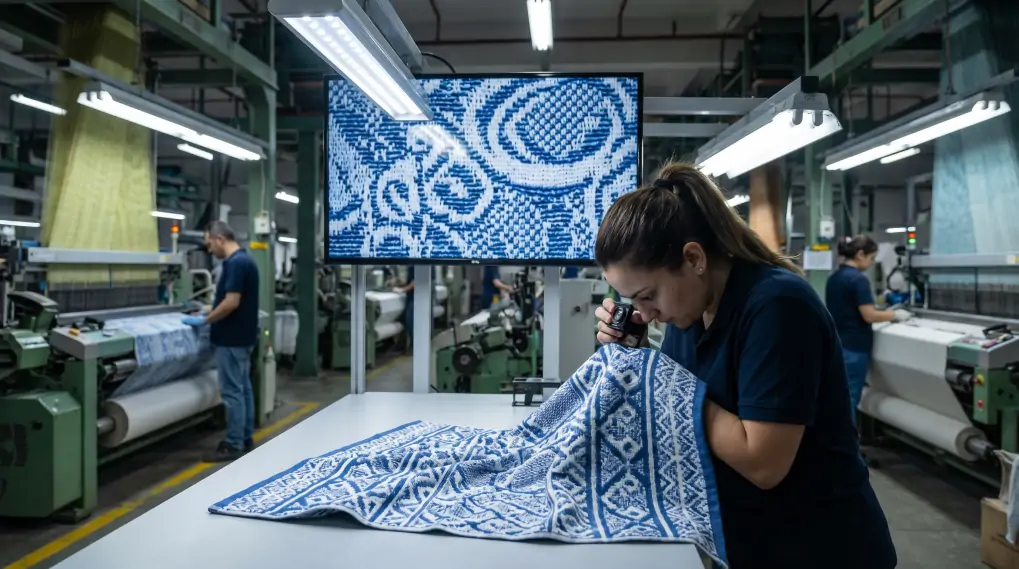
Camera-based Automated Optical Inspection systems continuously monitor the weaving process, detecting broken threads, irregular weave patterns, and pattern alignment deviations in real-time. When defects exceed tolerance thresholds, the system automatically flags the affected section for operator review and potential removal. AOI technology significantly reduces defect escape rates compared to manual inspection alone, providing statistical process control data that enables continuous improvement of weaving parameters.
Tensile Strength and Shrinkage Laboratory Testing
Pre-shipment laboratory testing verifies compliance with international quality standards using AATCC (American Association of Textile Chemists and Colorists) test methods. Tensile strength testing confirms that towel constructions withstand the mechanical stresses of industrial laundering without seam failure or pile loss. Shrinkage testing validates that dimensional changes remain within ±2% tolerance following standard washing protocols. Pre-shrinking processes during manufacturing ensure that finished products meet size specifications after initial laundering by end-users.
Batch Consistency and AQL 2.5 Standards
Acceptable Quality Level (AQL) 2.5 sampling protocols represent the hospitality industry's standard for textile product inspection. Under this protocol, random samples are drawn from each production batch and inspected for critical, major, and minor defects according to predefined acceptance criteria. Batches failing to meet AQL thresholds undergo 100% inspection with defective units removed before shipment. Professional manufacturers provide detailed inspection reports documenting AQL results, enabling procurement officers to verify quality compliance and maintain quality records for hospitality accreditation requirements.
8. Strategic Procurement: Solving the Lead-Time Dilemma
Lead time management represents a critical challenge for procurement officers managing inventory requirements across multiple channels and seasonal demand fluctuations. Strategic supplier relationships and production planning enable optimized lead time outcomes.
Production Capacity Planning for 10K+ Unit Orders
Large-scale orders exceeding 10,000 units require advance production capacity reservation to ensure delivery timelines. Professional manufacturers maintain multiple jacquard loom lines capable of parallel production, enabling efficient fulfillment of high-volume orders within compressed timeframes. Capacity reservation agreements typically require deposit payment and provide guaranteed production slots during peak demand periods. For recurring orders, blanket contract arrangements establish annual production capacity allocations that protect against supply constraints during busy seasons.
Navigating Peak Seasons in Textile Manufacturing
Textile manufacturing operates on seasonal cycles that influence both pricing and availability. Q3 (July-September) and Q4 (October-December) represent peak demand periods as hospitality operators prepare for high-occupancy seasons and promotional events. Orders placed during Q1 and Q2 generally benefit from improved pricing and shorter lead times due to reduced facility utilization. Booking production slots 60-90 days in advance of required delivery ensures adequate manufacturing time while avoiding premium pricing associated with expedited rush orders.
Inventory Management and Warehouse Staging Solutions
Bonded warehouse arrangements enable international buyers to stage inventory in destination markets without immediate duty payment, optimizing cash flow and enabling just-in-time delivery programs. Split-shipment agreements accommodate phased delivery requirements for multi-location operations, enabling single production runs to fulfill deliveries across distributed networks. Professional manufacturers offer consignment programs that maintain buyer-owned inventory at manufacturing facilities, triggering automatic replenishment shipments based on consumption triggers—effectively outsourcing inventory management to manufacturing partners with established logistics capabilities.
9. Customization Beyond the Logo: Shapes and Sizes
While logo integration represents the primary customization driver for most buyers, professional jacquard production accommodates diverse functional and aesthetic requirements through non-standard formats and specialized construction techniques.
Oversized Beach Towels and Round Jacquard Formats
Beach and pool environments require extended dimensions beyond standard bath towel formats. Typical beach towel dimensions range from 90cm × 180cm to 100cm × 200cm, providing adequate coverage for lounging. Round jacquard formats serve promotional and lifestyle brand applications where distinctive shapes enhance brand recognition and social media visual appeal. Custom shape production requires additional tooling investment but enables truly differentiated product offerings that stand apart from commodity alternatives.
Specialized Gym Towels with Integrated Zip Pockets
Functional integration addresses specific use-case requirements through specialized construction. Gym towels with integrated zip pockets accommodate secure storage of keys, cards, and small personal items during workouts. Pocket construction requires additional sewing operations following jacquard weaving, with reinforced stitching ensuring durability through repeated laundering. Moisture-wicking specifications may influence fiber blend selection, incorporating synthetic performance fibers alongside traditional cotton for enhanced quick-drying properties.
Custom Hemming and Branding Label Integration
Hemming specifications vary according to market requirements and aesthetic preferences. Woven labels integrated during manufacturing provide permanent brand identification that survives the product lifetime, preferred over printed labels that may deteriorate with washing. Satin edge finishes create smooth, premium border appearances suitable for luxury hospitality environments. Care instruction compliance requires proper labeling for EU and US market requirements, including fiber content, care symbols, and country of origin—professional manufacturers provide compliance documentation as standard program components.
10. The Economics of Bulk Jacquard Sourcing
Understanding the cost structure underlying jacquard towel pricing enables procurement officers to optimize purchase decisions and negotiate effectively with suppliers. Several distinct cost components differentiate jacquard from commodity textile products.
Understanding Sunk Costs in Machine Programming
Electronic jacquard loom setup involves significant fixed costs independent of order quantity: design programming, machine threading with specified yarn colors, and calibration testing consume several hours of skilled technician time before production commences. These setup costs, often ranging from $200-$500 per unique design, constitute a larger proportion of total cost for small orders but diminish rapidly as order quantities increase. Professional manufacturers amortize setup costs across order quantities, passing volume efficiency benefits to buyers who commit to adequate production volumes.
Amortizing Design Costs Across Large Volume Orders
The per-unit price curve for custom jacquard towels demonstrates steep initial pricing at low quantities, declining sharply as order volumes increase before stabilizing at scale-optimized pricing plateaus. Break-even analysis reveals that per-unit pricing typically halves when orders increase from 500 to 2,000 units, with diminishing but meaningful improvements continuing through 10,000+ unit quantities. For brands anticipating reorder cycles, front-loading initial orders to reduce per-unit pricing creates inventory carrying costs that must be weighed against per-unit savings—a calculation where professional supplier partnerships provide valuable guidance.
Comparative Analysis: Jacquard vs. Embroidery Costs
Embroidery and jacquard represent competing technologies for logo application, each with distinct cost structures and performance characteristics. Embroidery offers flexibility for small-quantity orders and enables photographic-quality reproduction of complex imagery, but suffers from dimensional texture that may feel uncomfortable against skin and limited durability on high-frequency laundering applications. Jacquard provides superior wash resistance and tactile integration but requires minimum quantities and setup investment. At volumes exceeding 1,000 units per design, jacquard typically achieves lower per-unit costs while delivering superior functional performance—making it the clear choice for hospitality applications where product longevity directly impacts procurement economics.
11. Sustainable Manufacturing in the Modern Factory
Sustainability credentials increasingly influence procurement decisions across hospitality and corporate supply chains. Professional jacquard manufacturers invest in environmental management systems that reduce operational impact while providing documentation required for ESG reporting and brand sustainability claims.
Water Recycling Systems in Yarn Dyeing Plants
Textile dyeing traditionally consumes significant water volumes, generating corresponding wastewater volumes requiring treatment before discharge. Modern dyeing facilities implement closed-loop water recycling systems that capture, treat, and reuse process water across multiple production cycles. Advanced facilities achieve 70-80% water recycling rates, reducing both operational costs and environmental impact. Water recycling systems require substantial capital investment, making them more common among established manufacturers with scale-optimized operations—factors that reinforce the value of partnering with established production facilities over emerging suppliers.
OEKO-TEX Standard 100 Compliance for Safety
OEKO-TEX Standard 100 certification confirms that textile products contain no harmful substances at levels exceeding established safety thresholds. Testing encompasses more than 100 individual parameters including formaldehyde, pesticides, heavy metals, and allergenic dyes. For European hospitality procurement, OEKO-TEX certification often represents a baseline requirement rather than a competitive advantage. Professional manufacturers absorb testing costs as standard program overhead, providing certification documentation that enables buyers to meet regulatory requirements across multiple market jurisdictions without additional investment.
Reducing Carbon Footprint in Textile Logistics
Ocean freight transportation generates significantly lower carbon emissions per unit than air freight, making sea shipping the preferred logistics mode for bulk textile orders despite longer transit times. Professional manufacturers optimize container utilization through efficient packing arrangements and consolidated shipment coordination, reducing per-unit transportation emissions. Carbon offset programs enable manufacturers to offer net-zero delivery options for buyers with sustainability commitments, while detailed logistics carbon footprint documentation supports ESG reporting requirements for corporate procurement departments.
12. Case Study: Scaling Hospitality Supply Chains
Practical implementation of jacquard programs demonstrates the tangible benefits available to procurement officers who invest in strategic supplier partnerships. The following case study illustrates typical program development and scaling trajectories.
Partnering with Global Hotel Groups for Linen Standardization
A leading international hotel group recently consolidated its global towel procurement under a single jacquard OEM program spanning 50,000+ annual units across 30+ properties. Initial program development required six months of sample development, color matching, and specification refinement to achieve consistent quality across three manufacturing facilities. The resulting standardization enabled 23% unit cost reduction compared to previous multi-supplier arrangements while simultaneously improving brand consistency scores measured through guest satisfaction surveys. Key success factors included executive sponsorship, clear technical specifications, and ongoing quality monitoring with shared data dashboards between manufacturer and hotel group procurement teams.
Streamlining Procurement for Promotional Agencies
Promotional agencies managing event merchandise programs face distinct challenges: compressed timelines, diverse product specifications, and multi-SKU inventory management across client accounts. A professional jacquard manufacturer partnered with a promotional agency to develop an optimized program structure featuring dedicated production slots, pre-approved color palettes, and standardized sizing that reduced per-order setup times from 21 days to 14 days. The manufacturer's ability to manage multi-SKU orders through consolidated production runs reduced minimum order quantities for individual SKUs while maintaining competitive unit pricing through aggregate volume commitments.
The Future of Jacquard: Smart Fibers and RFID Integration
Emerging smart textile technologies expand jacquard functionality beyond aesthetic branding into functional integration. NFC (Near Field Communication) chips embedded within textile constructions during weaving enable inventory tracking without separate label application. RFID-embedded yarns permit automated towel tracking in hospitality laundry operations, reducing loss rates and enabling precise inventory management. While current smart fiber applications represent premium options with higher unit costs, continued technology development and manufacturing scale will likely reduce integration costs to commodity levels within the 2025-2030 timeframe, creating opportunities for early adopters to differentiate through technological innovation.
Frequently Asked Questions
Why is the MOQ for jacquard towels usually higher than printed towels?
Jacquard production requires significant setup time to program the electronic loom with your specific design file and thread the machine with the yarn colors your pattern requires. These setup costs—typically $200-$500 per unique design—represent a fixed investment regardless of order quantity. Bulk orders enable manufacturers to amortize these initial costs across more units, resulting in lower per-unit pricing. While MOQs for basic two-color jacquard designs may start as low as 5000 units, complex multi-color designs may require minimums of 5,000-2,0000 units to achieve competitive pricing.
Can a jacquard towel accommodate high-resolution photographic images?
While jacquard weaving excels at logos, text, and geometric patterns, it is a pixel-based woven medium with inherent resolution limitations compared to digital printing. Extremely fine detail may require simplification or may not translate effectively into yarn-based reproduction. For photographic imagery, we recommend combining jacquard logo elements with high-density digital printing for photographic sections, or utilizing fine-gauge yarn technology with advanced photo-weaving techniques. Our technical team reviews all artwork submissions and provides guidance on achievable reproduction quality before sample production.
How do I ensure my corporate Pantone colors are matched exactly?
We utilize reactive dyeing in our dedicated yarn-dyeing facility, which provides superior color accuracy compared to package dyeing methods. Before mass production begins, we produce physical lab-dip samples for your approval, comparing dyed yarn against your Pantone reference under standardized lighting conditions. Our standard tolerance achieves Delta-E values of less than 1.0—differences imperceptible to the human eye. Lab-dip approval creates a documented reference standard maintained for future reorders, ensuring batch-to-batch color consistency across your entire jacquard towel program.
What certifications do your jacquard towels carry?
Our production facilities hold ISO9001:2015 quality management certification, OEKO-TEX Standard 100 product safety certification, and BSCI (Business Social Compliance Initiative) social compliance audit certification. These credentials satisfy requirements for EU market entry, US hospitality procurement specifications, and corporate social responsibility requirements. Additional certifications including GRS (Global Recycled Standard) for recycled content claims and GOTS for organic cotton specifications are available for specific product lines. Certification documentation is provided as standard program components.
What is the typical lead time for a custom jacquard towel order?
Standard production lead time is 30-45 days following sample approval and deposit confirmation. Sample development typically requires 15-21 days from artwork submission to approved physical sample delivery. Rush production programs with 21-day lead times are available for confirmed bulk orders, subject to facility scheduling availability and premium pricing. For large orders exceeding 10,000 units or multi-SKU programs, additional lead time for production scheduling coordination may apply. We recommend booking production slots 60-90 days in advance of required delivery dates.
Stop Settling for Fading Logos. Upgrade to Permanent Jacquard Excellence.
Industrial buyers, factory owners, and procurement managers need reliability. Our high-capacity production line handles your most complex OEM requirements with the speed and precision that modern commerce demands.