12 Critical Risks of Importing Custom Towels from China: A 2026 Procurement Security Guide for B2B Buyers
Is your supply chain vulnerable to inconsistent quality or sudden compliance failures when sourcing custom towels from China? For warehouse managers, factory owners, and procurement specialists, the allure of low-cost textile sourcing often masks significant operational dangers. A single container of defective custom towels can disrupt your distribution schedule, damage your brand reputation, and result in thousands of dollars in unrecoverable losses.
You need more than just a supplier; you need a risk management strategy. This guide dissects the 7 critical risks of importing custom towels from China and provides a professional roadmap to secure your B2B procurement process, ensuring that the bulk custom towels you order are exactly what arrives at your dock.
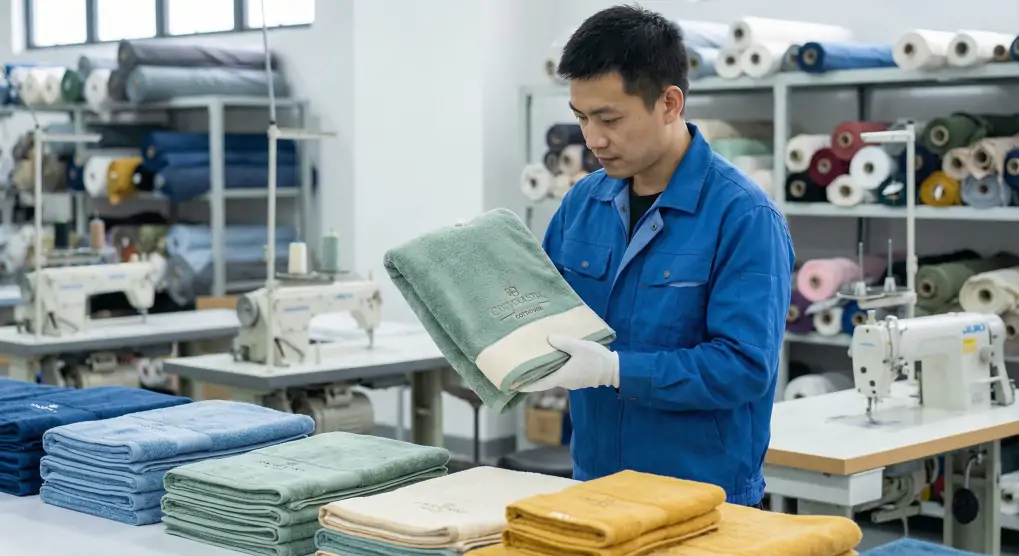
1. The "Quality Fade" Phenomenon in Custom Towel Manufacturing
One of the most insidious risks in custom towel manufacturing is "Quality Fade." This occurs when a supplier provides a perfect "Golden Sample" and perhaps even a flawless first shipment. However, over subsequent bulk orders, they imperceptibly reduce quality to increase their margins.
Material Adulteration in Custom Towel Production
Factories may subtly switch from 100% long-staple cotton to a blend containing lower-grade carded cotton or even small percentages of polyester. This affects absorbency and hand-feel, which might not be noticed until a customer complains about the custom towels.
GSM Variance in Bulk Towel Orders
A custom towel specified at 500 GSM (Grams per Square Meter) might gradually drop to 480 or 460 GSM in subsequent orders. While a single towel feels similar, the aggregate weight loss across a container represents significant value theft in B2B procurement.
Prevention Strategy for Bulk Buyers
Implement a "sealed sample" protocol. Keep a master sample from the initial approved batch and physically compare it against random units from every incoming shipment. Use digital scales to verify weight consistency immediately upon arrival. Consider hiring third-party inspection services for large orders.
2. Chemical Compliance and Regulatory Risks in Textile Importing
Custom towels are chemically intensive products. Importing towels that fail safety regulations in your target market (EU REACH, US CA Prop 65) can lead to customs seizures and costly lawsuits for B2B buyers.
The Azo Dye Danger in Custom Towel Production
Cheap dyes often contain Azo compounds, which are carcinogenic and banned in most Western markets. Non-compliant factories use these because they are cheaper and offer vibrant colors. Risks of importing custom towels from China often stem from these invisible chemical hazards.
Fake Certifications in OEM Programs
Do not trust a PDF file blindly. Many trading companies photoshop Oeko-Tex Standard 100 certificates. Always verify the license number on the official Oeko-Tex website to ensure the scope covers the specific product and factory you are dealing with.
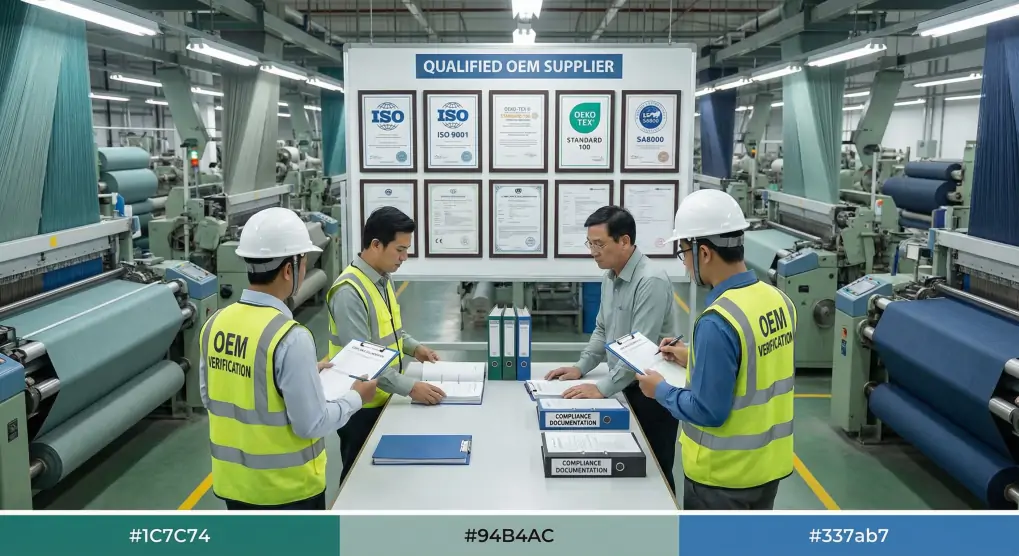
3. Trading Companies vs. Real Manufacturers in B2B Sourcing
In B2B sourcing for custom towels, clearly identifying the type of partner you are dealing with is crucial for efficient communication, cost management, and ensuring product quality. The supply chain typically involves two main types of partners: professional trading companies and manufacturing factories. Understanding the distinct roles, advantages, and considerations of each will lead to more informed and successful procurement decisions.
Working with Trading Companies
Trading companies act as coordinators and service providers within the supply chain. They manage the relationship between you, the buyer, and the production factory. They handle sourcing, order coordination, quality control, and logistics. While this adds a valuable layer of service and project management, it can also save buyer's time to arrange different products to shipping together. Response times and strong resolution capabilities help you solve the production issues arise depend heavily on the trader's relationship and leverage with their contracted factory.
Working with Direct Manufacturers
Manufacturers own and operate their production facilities, giving them direct control over the production process, quality standards, and capacity. Partnering directly with a factory typically allows for shorter communication lines and greater potential oversight of production details. To verify manufacturing capabilities, you can request a real-time video tour of the factory floor to see specific machinery (e.g., jacquard looms, dyeing vats) in operation. Suppliers with in-house production are usually willing to provide this level of transparency to build trust.
How to Identify and Choose the Right Partner
We recommend proactively clarifying and verifying a supplier's operational model during your inquiry:
-
Consider your primary needs: Do you value comprehensive service, flexibility, and single-point contact (where a trader may excel), or is direct control over the production process and potential cost efficiencies your top priority (where a direct manufacturer may be more suitable)?
Red Flag:Clearly understanding your partner's role is the first step toward building an efficient, transparent, and trustworthy business relationship.4. Logistics Nightmares: The Moisture Trap in Custom Towel Shipping
Shipping custom towels across the ocean presents unique physical risks that differ from hard goods in B2B logistics.
Container Rain and Moisture Damage
During 30+ days at sea, temperature fluctuations cause condensation inside the container, known as "container rain." If custom towels are not packed with adequate desiccants or if the cartons are weak, you may receive a container full of moldy, unusable product.
Vacuum Packing Risks for Bulk Towel Orders
To save space, factories vacuum pack custom towels. However, extreme compression for prolonged periods can crush the pile loop, making the towel look flat and cheap upon opening. It is crucial to balance volume savings with product integrity.
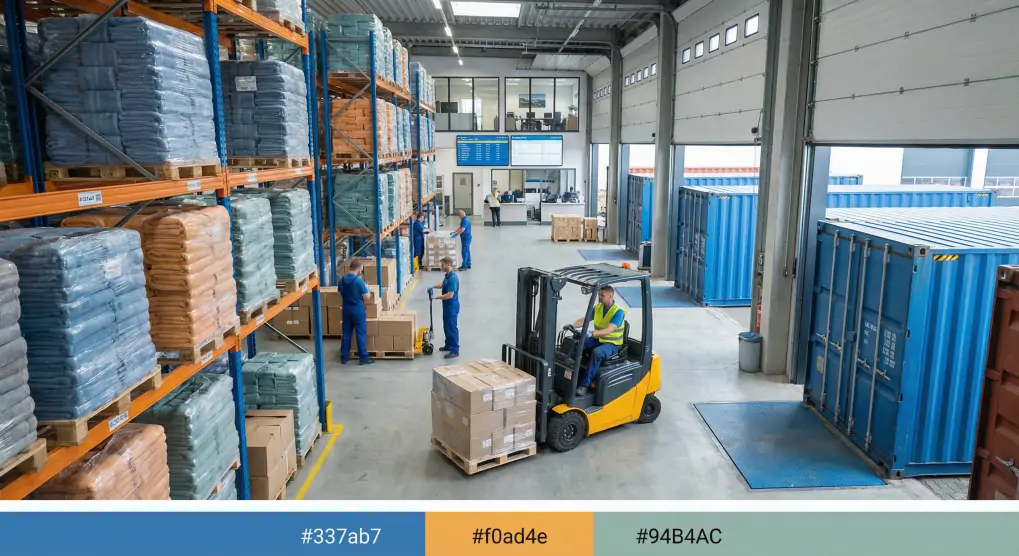
Professional wholesale towel logistics ensuring safe shipping for bulk custom towel orders 5. Unforeseen Production Delays in Custom Towel Manufacturing
Time is money in B2B custom towel procurement. In the textile industry, specific seasonal events can cause catastrophic delays that affect your supply chain.
The Chinese New Year Manufacturing Halt
The entire custom towel manufacturing sector shuts down for 3-4 weeks around January/February. Workers often do not return, leading to a labor shortage and quality dip in March. Ordering custom towels too close to this holiday is a massive risk for B2B buyers.
Environmental Inspections Affecting Production
The Chinese government frequently conducts surprise environmental audits on dyeing houses. If your custom towel supplier is not fully compliant with water treatment laws, their factory can be shut down overnight, leaving your order stranded in a half-dyed state.
Best Practice: Place custom towel orders at least 3 months before Chinese New Year to avoid production delays and ensure factory availability.6. Protecting Your Custom Designs in OEM Programs
If you are developing a custom OEM towel with a unique pattern or patented weave, intellectual property theft is a valid concern in B2B manufacturing.
"Open Mold" Issues in Custom Towel Design
Unethical suppliers may take your custom design and offer it to other clients or list it on B2B platforms as their own sample. This dilutes your brand exclusivity and competitive advantage.
NNN Agreements for B2B Protection
Before sharing tech packs for custom towel production, sign a NNN (Non-Disclosure, Non-Use, Non-Circumvention) agreement enforceable in China. This offers legal standing that a standard Western NDA does not.
7. The EAV Model for Risk Reduction in Custom Towel Procurement
Ambiguity in contracts is the enemy of successful B2B procurement. Use the Entity-Attribute-Value (EAV) model to define your custom towel product rigidly.
Attribute Risk Factor Required Specification B2B Verification Method Fiber Content Mixing in Polyester 100% Ring Spun Cotton (Burn test required) Third-party lab testing upon delivery Weight (GSM) Low GSM Delivery +/- 5% Tolerance Limit strictly enforced Digital scale verification on random samples Color Fastness Bleeding/Fading Issues Grade 4 minimum (ISO 105-C06 standard) AQL 2.5 inspection with colorfastness testing Dimensions Shrinkage after wash Pre-shrunk or oversized by 8% to account for shrinkage Measurement verification before and after wash test MOQ Compliance Minimum Order Quantity flexibility Negotiated MOQ based on annual volume commitments Written agreement on MOQ terms and volume discounts 8. Financial Security and Payment Fraud in B2B Towel Procurement
Large B2B custom towel transactions attract cybercriminals. A common scam involves email hacking and payment redirection.
The "Changed Bank Account" Email Scam
You might receive an email that looks exactly like your custom towel supplier's, claiming their bank account is under audit and asking you to wire funds to a new account. Never do this without verbal verification via video call with known personnel.
Letter of Credit (LC) for Large B2B Orders
For custom towel orders exceeding $50,000, consider using a Letter of Credit. This ensures the bank only releases funds when the supplier presents valid shipping documents and quality inspection reports for your bulk order.

Professional B2B procurement meeting discussing custom towel specifications and MOQ requirements 9. Communication: The Root of All B2B Procurement Errors
Technical English varies between industries and regions. A "bath sheet" in the US might be interpreted differently in a factory in Hebei when manufacturing custom towels.
Tech Packs are Mandatory for Custom Production
Never rely on email descriptions for custom towel orders. Create a comprehensive Tech Pack including Pantone codes, vector artwork for logos, detailed specifications for dimensions, GSM, and diagrams for label placement. This serves as the "source of truth" for B2B manufacturing.
10. Underestimating the Total Landed Cost in Custom Towel Importing
A cheap FOB price does not mean a cheap final product for custom towels. Failing to calculate duties properly is a major risk in B2B procurement.
Anti-Dumping Duties on Chinese Textiles
Some countries impose high anti-dumping duties on Chinese custom towels. Ensure you know the exact HS Code (usually starting with 6302) and check your local tariff schedule before placing the order to avoid unexpected costs.
Hidden Costs in Custom Towel Manufacturing
Factor in additional costs for: tooling charges for custom designs, sampling costs for new patterns, testing fees for compliance verification, and packaging customization for B2B requirements.
11. The Pre-Production Sample Trap in Custom Towel Orders
Approving a sample made in a sample room is different from approving mass production of custom towels.
Pilot Runs for Large Custom Towel Programs
For large custom towel programs, insist on a "Pilot Run" of 300-500 pieces before authorizing the full 10,000 piece run. This reveals how the machinery handles your specific design at production speed.
Sample Room vs. Production Line Quality
Sample rooms often use premium materials and extra attention. Production lines operate at scale with standard procedures. Always request production samples from the actual production line before bulk orders.
12. Lack of Third-Party Oversight in B2B Quality Control
Trusting the factory's internal QC report is a conflict of interest. They want to ship; you want quality in your custom towel orders.
Final Random Inspection (FRI) for Custom Towels
Hire an independent agency to perform an FRI based on AQL 2.5 standards for your custom towel shipment. If the defect rate exceeds the limit, the factory must re-work the goods at their expense before the final payment is released.
Third-Party Testing Laboratories
For compliance-sensitive custom towel orders, use independent testing laboratories to verify GSM, colorfastness, fiber content, and chemical compliance. This provides unbiased verification for B2B buyers.
Critical Warning: Never rely solely on factory self-inspection reports for custom towel quality verification. Always implement third-party oversight for B2B orders.Frequently Asked Questions for B2B Custom Towel Procurement
What is the typical MOQ for custom towel manufacturing in China?
MOQ varies by product type and customization level for B2B buyers:
- Basic custom towels: 500-1000 pieces per design
- Embroidered towels: 1000-3000 pieces per design
- Jacquard/custom woven: 2000-5000 pieces per design
- Hotel-grade luxury towels: 2000+ pieces minimum
Negotiate MOQ based on annual volume commitments and payment terms with established B2B relationships.
How do I verify a Chinese towel manufacturer's certifications?
Follow this verification protocol for B2B custom towel procurement:
- Oeko-Tex certificates: Verify through official Oeko-Tex Label Check system using certificate number
- ISO certificates: Cross-reference with certification body databases
- Factory audit reports: Request recent third-party audit reports
- Business license: Verify through Chinese National Enterprise Credit Information Publicity System
- References: Contact other B2B clients in your region for supplier feedback
What are the standard payment terms for bulk custom towel orders?
Industry-standard payment terms for B2B custom towel procurement:
- Standard orders: 30% -50%deposit upon order confirmation, 70% -50% balance after third-party inspection (AQL 2.5)
- Large orders ($100,000+): Consider Letter of Credit (LC) for added security
- Established suppliers: May offer 30/70, 50/50 or even 20/80 terms
- First-time orders: Typically 50/50, 30/70 with sample approval required before production
Always include penalty clauses for late delivery and quality non-compliance in your purchase agreements.
How long does custom towel production typically take?
Production timelines for B2B custom towel orders:
- Sample development: 7-15 days after tech pack approval
- Production lead time: 25-65 days depending on complexity and quantity
- Shipping time: 30-65 days by sea freight
- Total timeline: 60-145 days from order confirmation to delivery
Factor in Chinese New Year delays (add 3-4 weeks) and environmental inspection seasons.
What quality control measures should I implement for custom towel orders?
Implement a comprehensive QC strategy for B2B custom towel procurement:
- Pre-production samples: Approve samples from production line, not sample room
- During production: Request daily progress reports with photos
- Pre-shipment inspection: Third-party AQL 2.5 inspection mandatory
- Container loading: Supervise or witness loading process
- Arrival inspection: Random sampling and testing upon delivery