Negotiating with Chinese Towel Suppliers: Smart B2B Strategies for Better Deals (2025)
For procurement managers, hotel chain operators, and private label brand owners, sourcing towels from China presents a significant opportunity—and a complex challenge. The allure of competitive pricing is often tempered by concerns over quality consistency, high Minimum Order Quantities (MOQs), opaque communication, and the risk of unreliable partners. Your warehouse can't afford stockouts from production delays, and your brand's reputation depends on the quality of every single terry cloth product that reaches your customers. This guide moves beyond surface-level tips to provide a comprehensive, actionable framework for navigating the Chinese towel market. We will dissect the process from initial vetting to final contract, equipping you with the strategies for getting better pricing from Chinese towel factories and securing terms that protect your business interests.

Understanding the Landscape: The Foundation of a Strong Negotiation
Before you can effectively negotiate, you must understand the environment you're operating in. The Chinese textile industry is not a monolith; it's a diverse ecosystem of manufacturers, trading companies, and regional specializations. A successful procurement strategy for Chinese terry cloth products begins with deep market intelligence. Failing to do this groundwork is like navigating a maze blindfolded—you might eventually find your way, but you'll waste significant time and resources, and likely leave a much better deal on the table. Many buyers make the critical error of jumping straight into price discussions without first qualifying the supplier and understanding their position in the market. This often leads to mismatched expectations, quality disputes, and ultimately, failed partnerships.
A truly strategic approach involves mapping the supplier landscape to identify the right type of partner for your specific business needs. Are you looking to source bulk cotton towels from China for a budget-friendly gym chain, or do you need a private label towel manufacturer in China capable of producing premium, high-GSM hotel towels? The ideal partner for one is rarely the best for the other. This initial phase of due diligence is not a preliminary step to be rushed; it is the most critical investment you will make in the entire sourcing process. It sets the foundation for every subsequent negotiation and determines the ultimate success of your supply chain.
Pre-Negotiation: Setting the Stage for Success
The most critical phase of any negotiation happens before you ever speak to a sales representative. This is where you build your leverage. A disorganized buyer who sends a vague RFQ like "quote for 10,000 bath towels" is immediately signaling inexperience and will receive a generic, high-margin price. A professional buyer, however, presents a comprehensive technical package that demonstrates expertise and seriousness, forcing the supplier to compete on a much more detailed and transparent level. This is your first opportunity to take control of the conversation.
Your primary tool is a detailed Product Specification Sheet. This document should leave no room for ambiguity. This is how you discuss quality standards for bulk towel orders from a position of strength. Instead of letting the supplier dictate the materials and construction, you define them with precision. This includes specifying the exact type of cotton, the yarn type, the desired towel gsm for hotels (e.g., 650 GSM), and precise finishing details. Pls understand: Premium Quality Commands Premium Pricing, Operate on the principle of "you get what you pay for." To stay within your budget, please avoid setting unrealistic quality expectations. Below is a professional-grade example using an Entity-Attribute-Value model that you should adapt for your RFQs.
Product Technical Parameter Table (EAV Model)
| Entity | Attribute | Value |
|---|---|---|
| Bath Towel (SKU: HTL-LUX-001) | Product Category | Hotel & Hospitality Linen |
| Bath Towel (SKU: HTL-LUX-001) | Material Composition | 100% Combed Cotton |
| Bath Towel (SKU: HTL-LUX-001) | Yarn Specification | 21s/2 Double-Loop Terry |
| Bath Towel (SKU: HTL-LUX-001) | GSM (Grams per Square Meter) | 700 GSM (+/- 5%) |
| Bath Towel (SKU: HTL-LUX-001) | Dimensions (Post-Wash) | 75 cm x 150 cm |
| Bath Towel (SKU: HTL-LUX-001) | Weave Type | Dobby Border |
| Bath Towel (SKU: HTL-LUX-001) | Color | White (Optical White, Vat Dyed for chlorine resistance) |
| Bath Towel (SKU: HTL-LUX-001) | Hemming | Double-Needle Stitched, Lock-Stitch |
| Bath Towel (SKU: HTL-LUX-001) | Labeling | Woven private label, sewn into hem |
| Bath Towel (SKU: HTL-LUX-001) | Compliance | Oeko-Tex Standard 100 |
Beyond product specifications, your pre-negotiation homework involves comprehensive supplier vetting. To verify a towel supplier's credentials in China, start by requesting their business license to confirm they are a legally registered manufacturer. Use third-party auditing services or a video call to conduct a virtual factory audit. A legitimate factory will be proud to show you their operations. Furthermore, understand the regional differences. The Hebei vs Shandong towel industry comparison is crucial; Gaoyang in Hebei is a massive hub for cost-effective towels and higher-grade quality towels, while Shandong often focuses on higher-grade export quality.
The Negotiation Itself: Tactics and Techniques
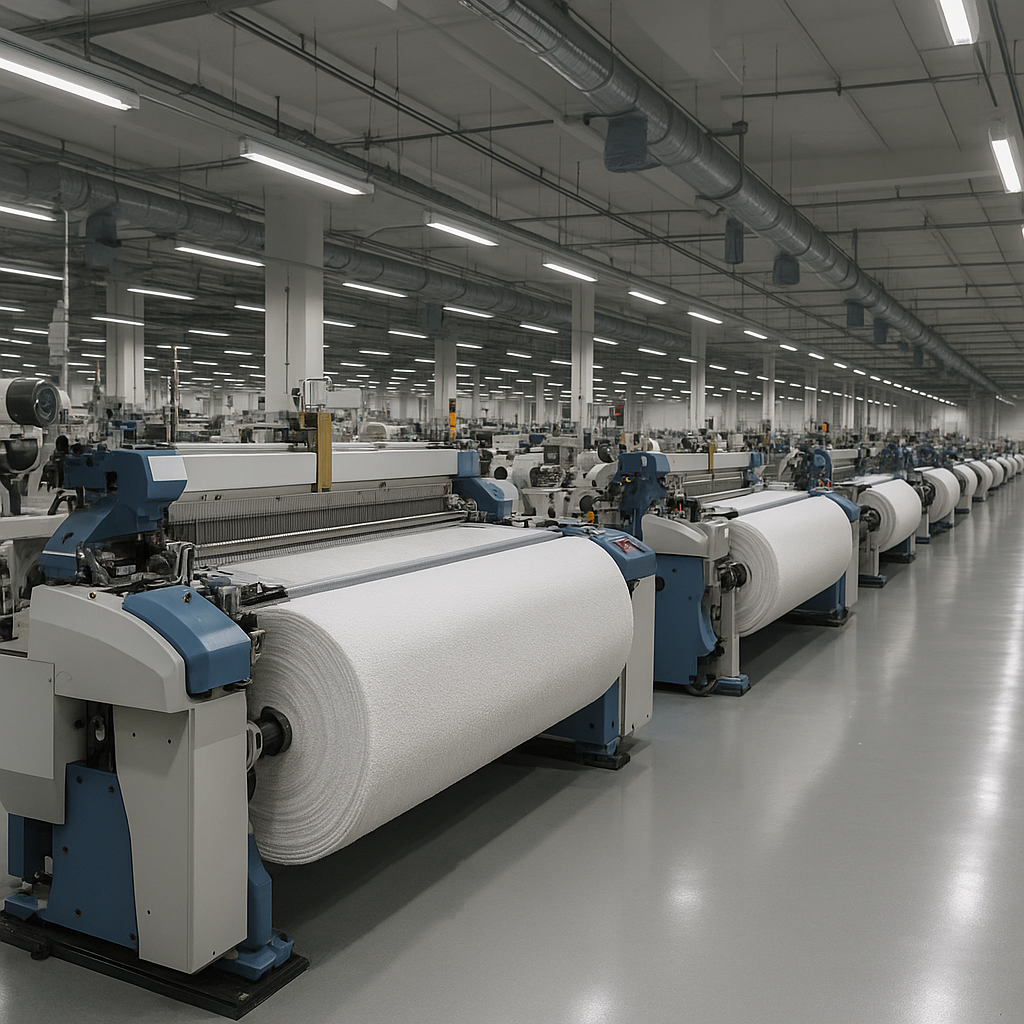
With your preparation complete, you are ready to engage. The negotiation is not a single conversation but a process. Avoid the common mistake of fixating solely on the unit price. A low price is worthless if quality is poor, lead times are long, or payment terms are risky. A holistic approach is essential for crafting sustainable bulk towel sourcing contracts in China.
One of the most effective tactics is to start by discussing quality and production processes as well as the test stardard, test charge, not price. Specifying testing standards, timelines, costs, and agencies upfront sends a strong quality signal to suppliers. They will factor these costs into their quote and ensure compliance. Introducing these terms after quoting appears unprofessional and undermines your credibility. Ask detailed questions to ask Chinese towel suppliers before ordering, such as: "What is your standard procedure for quality control during the weaving process?". This approach reinforces your commitment to quality and allows you to gauge the supplier's sophistication. It also provides a natural transition into discussing how quality affects price.
When they give you the first price, try a collaborative approach: "Thank you for the quotation. It is a bit above our budget. Could you help me understand the main cost drivers?". This opens a dialogue about trade-offs rather than a confrontational price war. Remember to anchor your price discussions to objective criteria: your target price, competitor quotes, and the volume of your order. Always negotiate multiple variables. If they won't budge on price, pivot to other levers like payment terms or lead times.
Respect when a supplier cannot lower their price further; it often indicates they've reached their limit. Pushing beyond this point may force them to compromise on quality to meet your cost target. Remember, receiving towels that meet your quality standards is ultimately more important than securing the lowest possible price.
Post-Negotiation: Securing the Deal and Managing the Relationship
A verbal agreement is not a deal. Formalize all agreed-upon points into a legally binding Purchase Contract or Proforma Invoice (PI). This document is your ultimate protection and must be meticulously detailed. It must explicitly reference your spec sheet, price, Incoterms, payment terms, lead time, QC protocol, and penalties for delays or quality failures. This is your insurance policy.
Once the contract is signed, the work shifts to managing supplier relationships in China's textile industry. Maintain clear, consistent communication and request weekly production updates. This active monitoring prevents your order from being de-prioritized. Address small issues as they arise. Building this goodwill and *guanxi* (relationship) is invaluable for future orders and will transform a transaction into a profitable partnership.

Key Negotiation Levers: Beyond the Unit Price
Experienced B2B buyers know a successful negotiation isn't just about the lowest unit price. The China towel factory price negotiation is one piece of a larger puzzle. True mastery lies in understanding all the levers—MOQ, payment terms, and quality standards—to create a balanced deal that optimizes for quality, cash flow, and supply chain stability.
Mastering MOQ (Minimum Order Quantity) Negotiations
A high MOQ ties up capital and increases inventory risk. Learning how to negotiate MOQ with towel suppliers in China is a fundamental skill. Present a compelling business case: offer to pay a small premium for a trial order, combine SKUs to meet a fabric dye lot minimum, or leverage a forecast of larger future orders to justify a smaller initial run. This shows you respect their business model while working towards your own.
Structuring Favorable Payment Terms
Cash flow is king. The standard 30%-50% deposit / balance before shipment term heavily favors the supplier. Your goal is to shift this risk. The best term to aim for with a new supplier is **30% deposit / 70% balance after a successful third-party inspection**. This ensures you only pay in full *after* verifying the goods meet your standards. For large orders, a Letter of Credit (L/C) offers robust security for both parties. For smaller orders via Alibaba, their Trade Assurance service acts as a protective escrow.
Defining Quality Standards and Inspection Protocols
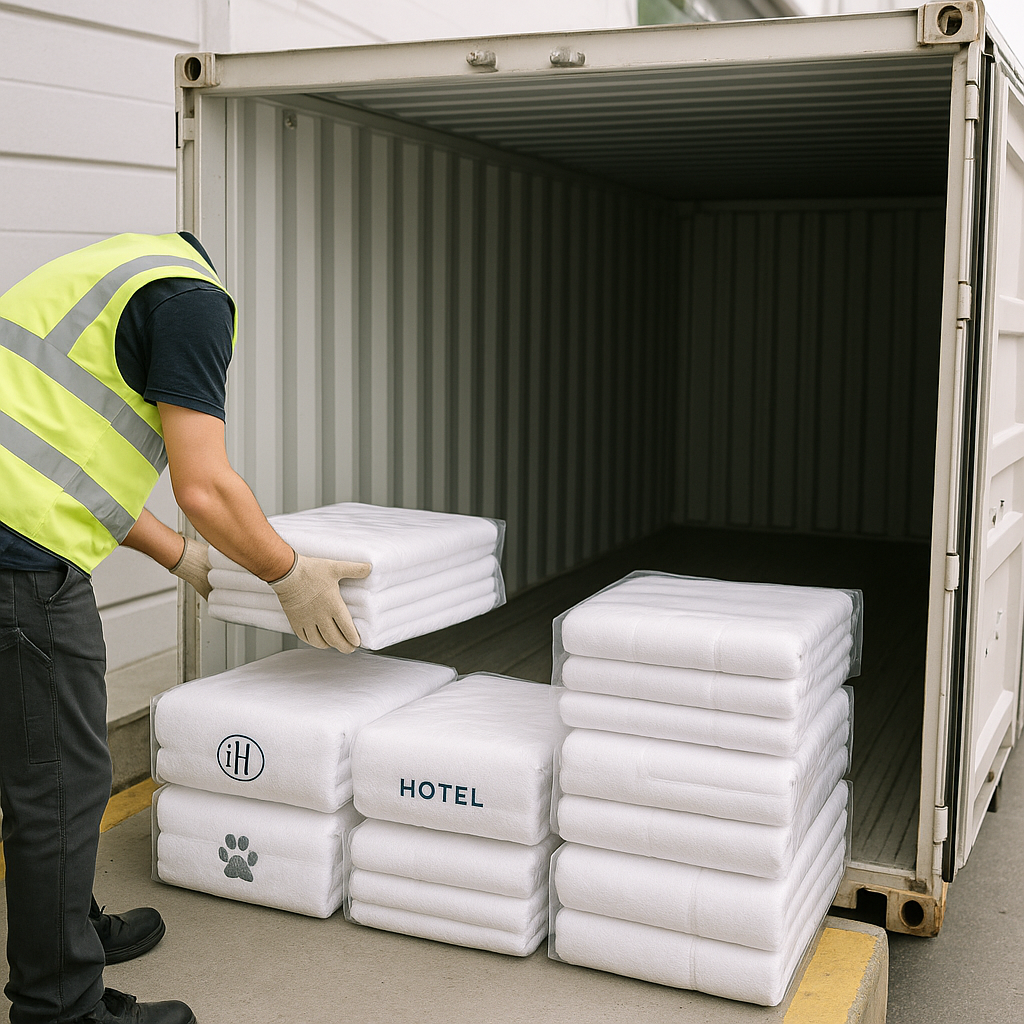
"Good quality" is dangerously vague. Eliminate subjectivity by writing a formal Quality Control and Inspection Protocol into your contract. Define material verification, GSM testing methods, and create a defect classification list with specific tolerances (AQL standards). Most importantly, the contract must grant your designated third-party inspection agent the right to perform a pre-shipment inspection. This makes quality an enforceable contractual obligation, not just a hopeful request.
B2B Purchase FAQ: Your Questions Answered
1. How do I verify a towel supplier's credentials in China?
Verify a supplier by requesting their business license. This confirms they are a registered company and protects you from dealing with a fraudulent entity. Conduct a video factory tour to see their operations. Ask for quality certifications like Oeko-Tex or ISO 9001. Finally, always place a small sample order to assess quality and communication before committing to a bulk purchase.
2. What is a reasonable MOQ for custom hotel towels?
For a standard white towel, a reasonable MOQ might be 1,000-3,000 pieces per size. If you require a custom color, the MOQ will be much higher due to the yarn dyeing process. A key negotiation tactic is to ask if you can combine multiple sizes (bath, hand, face) in the same color to meet their dye lot minimum.
3. What are the best payment terms I can negotiate?
For a new supplier, the best and most realistic term is **30%-50% T/T deposit, and the balance T/T after a successful third-party pre-shipment inspection.** This protects you from paying for defective goods. As you build a relationship, you can negotiate even better terms. Using L/C also provides excellent payment protection. To secure an accurate quote and maintain strong supplier relations, define all technical and financial terms upfront. Any request to change payment terms after the fact is viewed as unprofessional and can severely damage trust, as suppliers have already calculated their costs based on your initial request.
4. Should I source from a factory or a trading company?
Here are the key advantages of each:
Sourcing from a Factory:
-
Cost-Effectiveness: Typically offers more competitive pricing by eliminating intermediary margins.
-
Direct Technical Communication: Enables direct dialogue with the production team for clearer specification handling.
-
Production Control: Provides greater visibility and potential influence over the manufacturing process.
-
Faster Sample Development: Often allows for quicker sample turnaround and revision cycles.
Sourcing from a Trading Company:
-
Service-Oriented Approach: Often provides dedicated customer service and smoother communication in English.
-
Supply Chain Flexibility: Can source various products or materials from a network of pre-vetted factories.
-
Quality Assurance Support: Many conduct factory audits and implement quality control inspections on your behalf.
-
Logistical Handling: Manages consolidation, shipping, and documentation, simplifying the process for you.
-
Lower Volume Accessibility: Frequently offers more flexibility for smaller order quantities.
Conclusion:
The decision need not be a strict choice between a factory or a trading company. The primary focus should be on identifying a reliable partner that ensures clear communication, attentive service, consistent quality that meets requirements, and reliable on-time delivery.
Whether you work directly with a factory or through a trading company, what truly matters is their capability to deliver products that match your quality standards at a price point that is acceptable to you.
5. What are the most common negotiation mistakes to avoid?
The top three mistakes are: 1) Appearing desperate or rushed, which gives the supplier all the leverage. 2) Focusing only on price while ignoring critical factors like payment terms and quality clauses. 3) Not have clear details requirement, no technical sheet, no speifications. 4)Being overly aggressive, which can cause a supplier to "lose face" and become uncooperative. A firm but respectful, relationship-focused approach is far more effective.